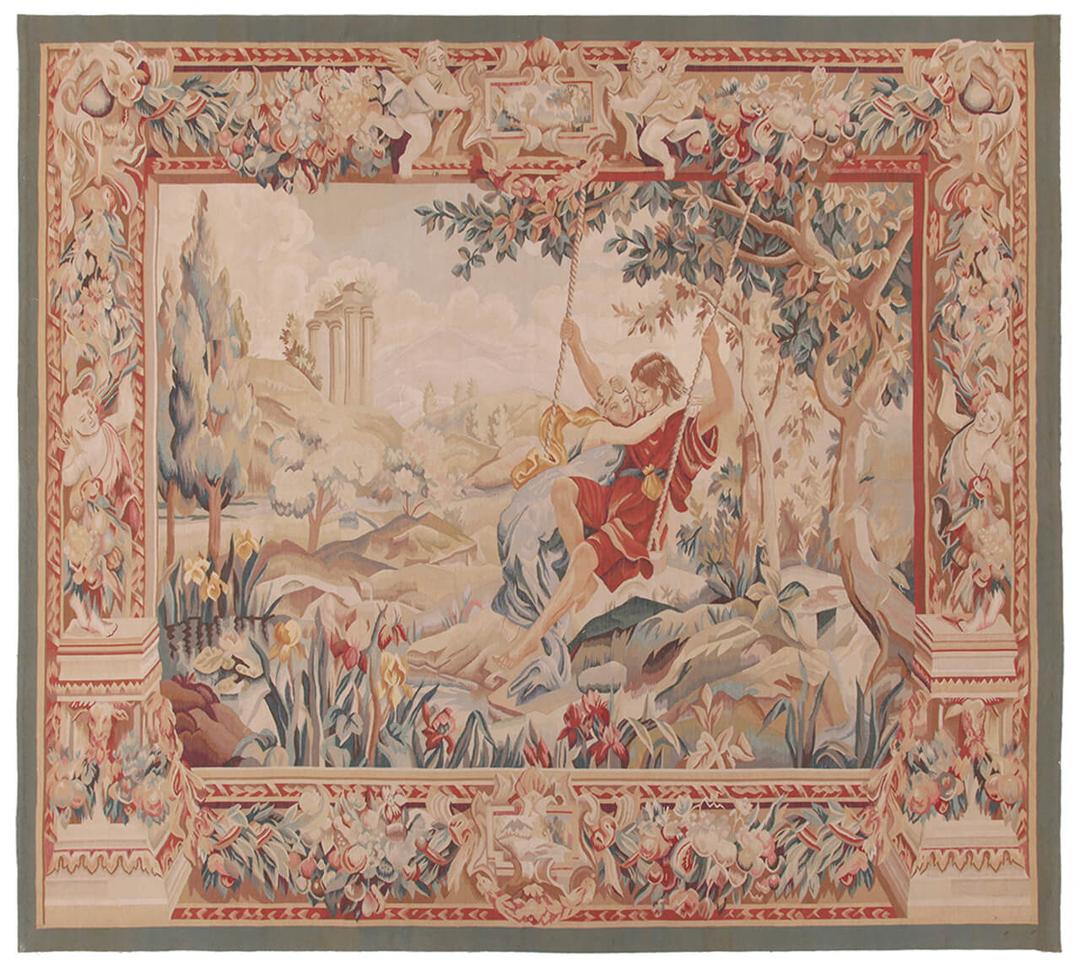
The Aubusson tradition traces its origins to the town of Aubusson in central France, where tapestry weaving became a celebrated craft as early as the 15th century. These tapestries were originally intended to adorn the walls of palaces and grand estates, depicting mythological scenes, landscapes, and romantic allegories. Over time, the style evolved, and the intricate designs once reserved for walls were adapted into flat-woven rugs that brought the same level of artistic prestige to the floors of distinguished homes.
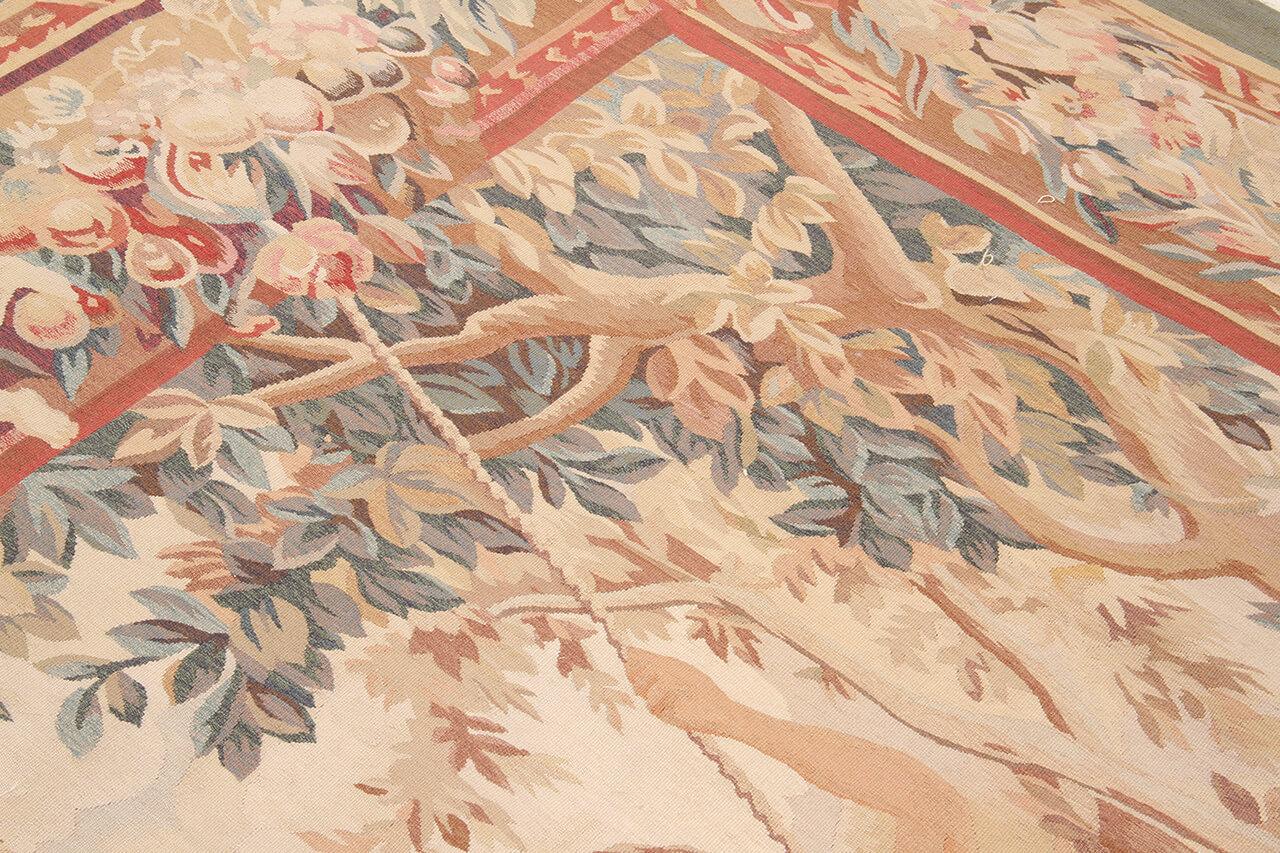
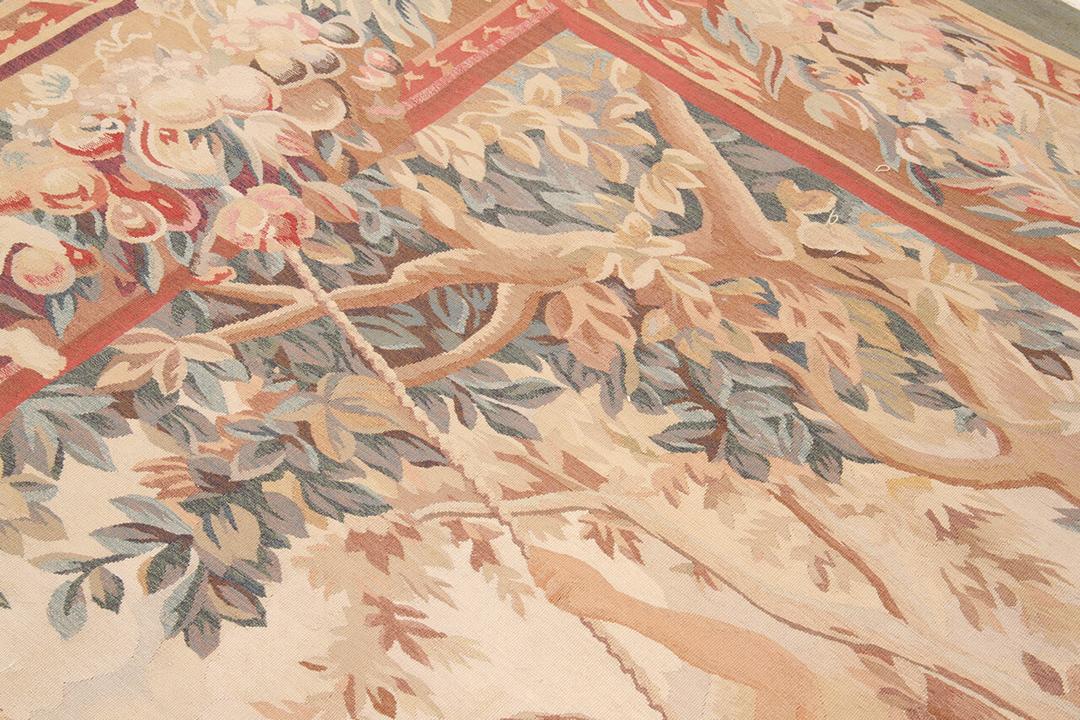
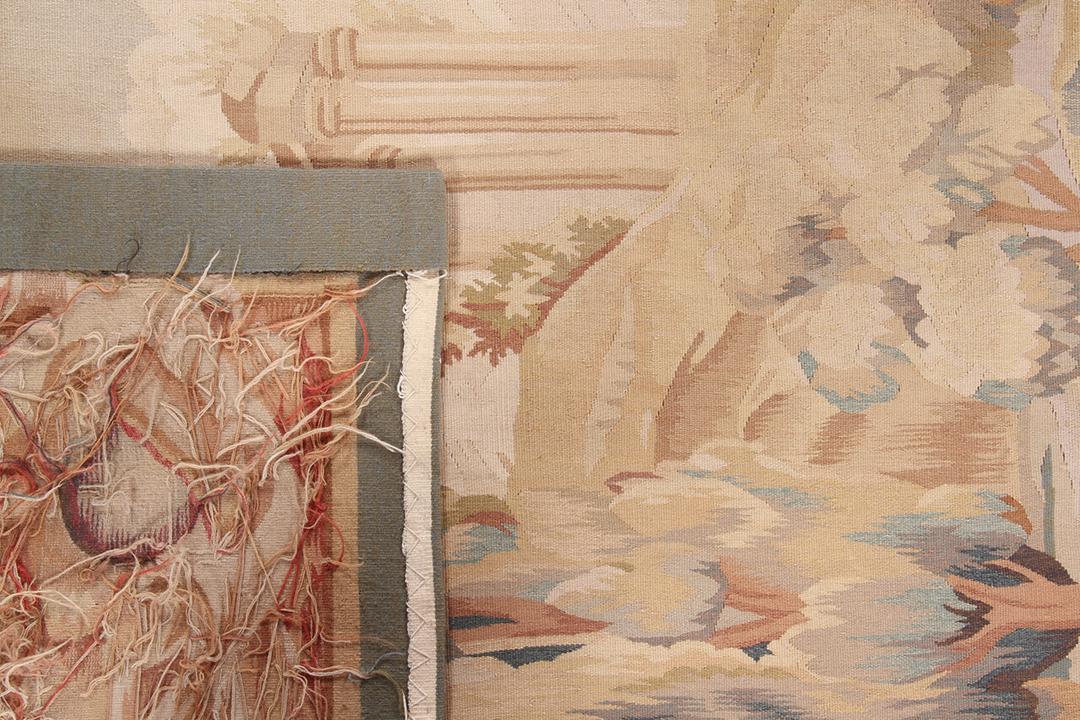
Technically, the term Aubusson refers to a specific type of flat-woven rug that lacks a pile. This construction method allows for a much higher level of detail compared to knotted rugs, as the weavers can create smooth curves and fine shading within the design. This makes the Aubusson style particularly well-suited for complex pictorial motifs, as the flat surface allows the image to remain perfectly clear and undistorted by the texture of a pile.
Signature design elements of this tradition include elaborate floral borders, medallions, and scenes featuring human figures or animals set within naturalistic landscapes. The use of muted, sophisticated tones is a hallmark of the style, designed to create a sense of harmony and grace. This particular piece pays homage to those classic motifs, utilising the traditional balanced composition that was favoured by French designers for centuries.
Owning an Aubusson-style rug is a way to connect with a long history of European decorative arts. These pieces are highly valued by collectors not just for their aesthetic appeal, but for the immense skill required to produce them. By bringing this piece into your home, you are continuing a legacy of beauty and craftsmanship that has been cherished by generations of art lovers and interior enthusiasts alike.