The Aubusson tradition, while rooted in the historic French town of the same name, has evolved over centuries to influence textile arts globally. Originally established in the 17th century under royal patronage, these tapestries were renowned for their ability to depict complex, painterly scenes of landscapes and mythology. Over time, the style migrated, and skilled artisans in various regions began adapting these classic designs, blending European aesthetic sensibilities with local weaving traditions to create pieces that bridge the gap between wall art and floor coverings.
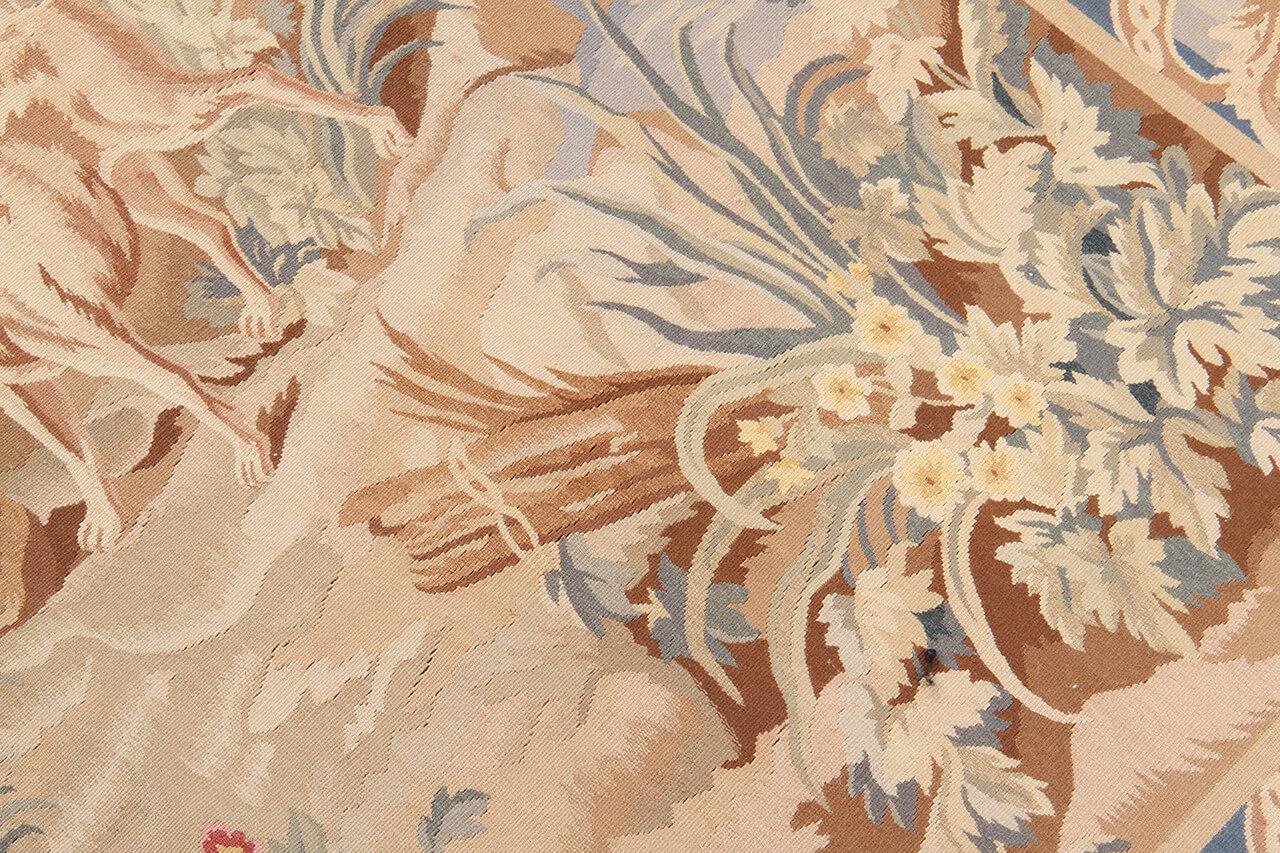
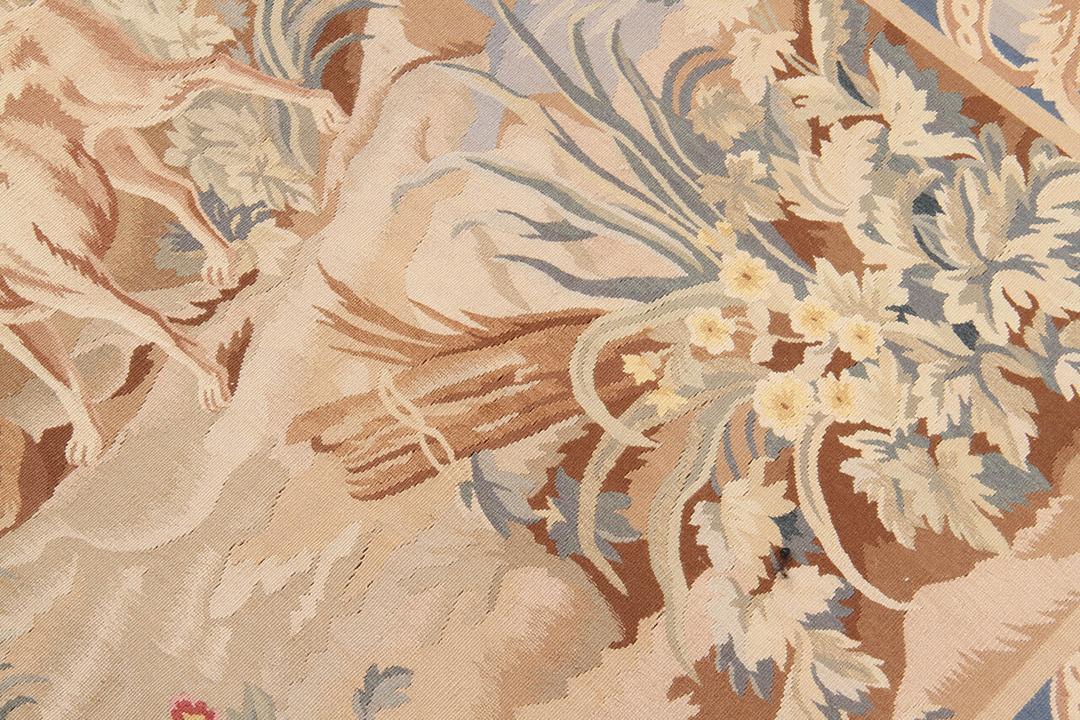
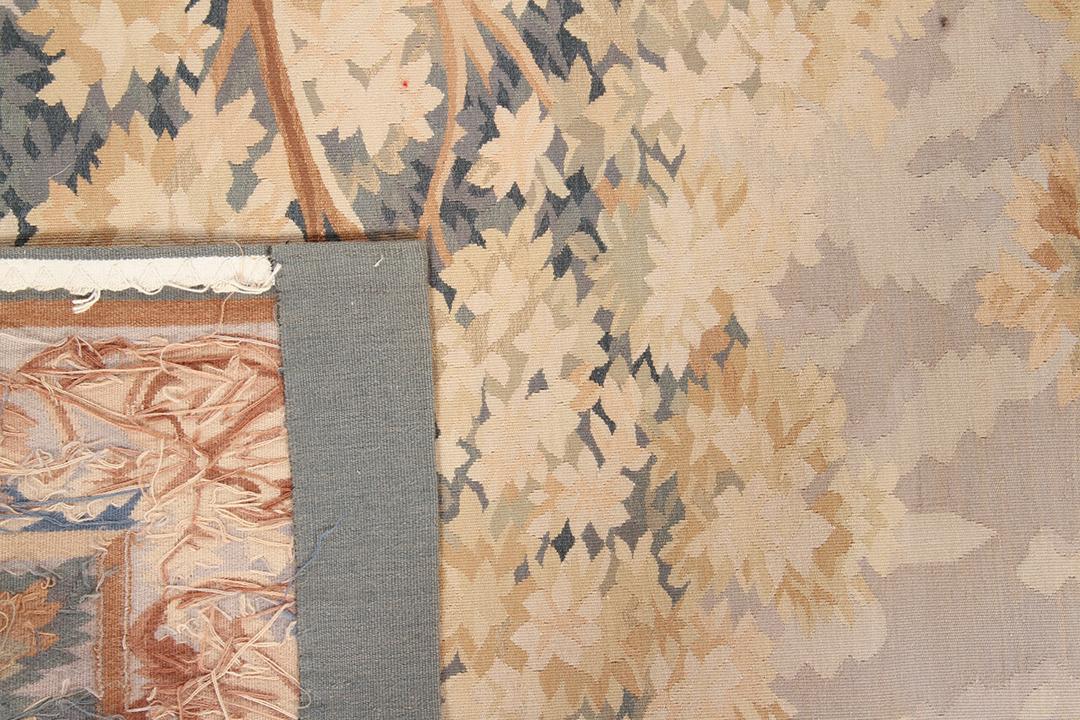
Technically, an Aubusson-style rug is defined by its flat-woven, tapestry-like construction. These pieces are created by interweaving the coloured weft threads directly through the warp, a method that allows for the creation of intricate, non-repeating pictorial designs. This technique is what gives the surface its characteristic smooth, low-profile finish, making it a distinct departure from the thick, textured pile of traditional Middle Eastern rugs.
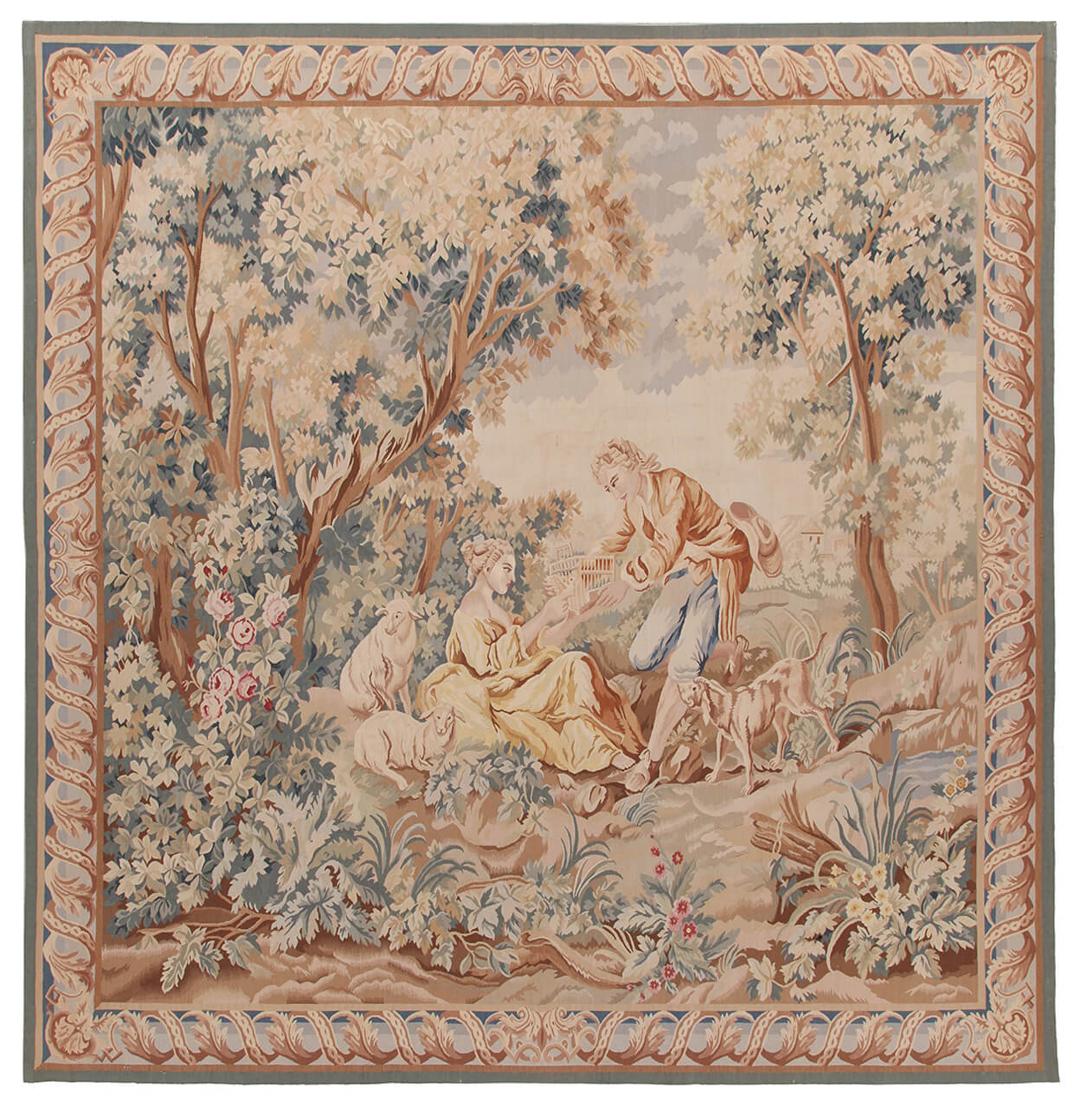
The visual language of these pieces is dominated by themes of nature and idyll. You will frequently find scenes featuring lush forests, pastoral figures, and decorative borders that draw inspiration from 18th-century French design. The use of soft, harmonious palettes is a signature of this tradition, designed to bring a sense of light and space into a room. When you see a piece with such depth of field and detailed composition, you are witnessing a tradition that prioritises storytelling through textile.
Owning an Aubusson-style tapestry rug is an act of preserving a rich decorative heritage. These rugs are highly valued by collectors not just for their aesthetic appeal, but for the immense skill required to execute such complex imagery. They represent a pinnacle of weaving craft, serving as a reminder of a time when textiles were considered the highest form of interior decoration. By bringing this piece into your home, you are participating in a long-standing tradition of artistic appreciation.