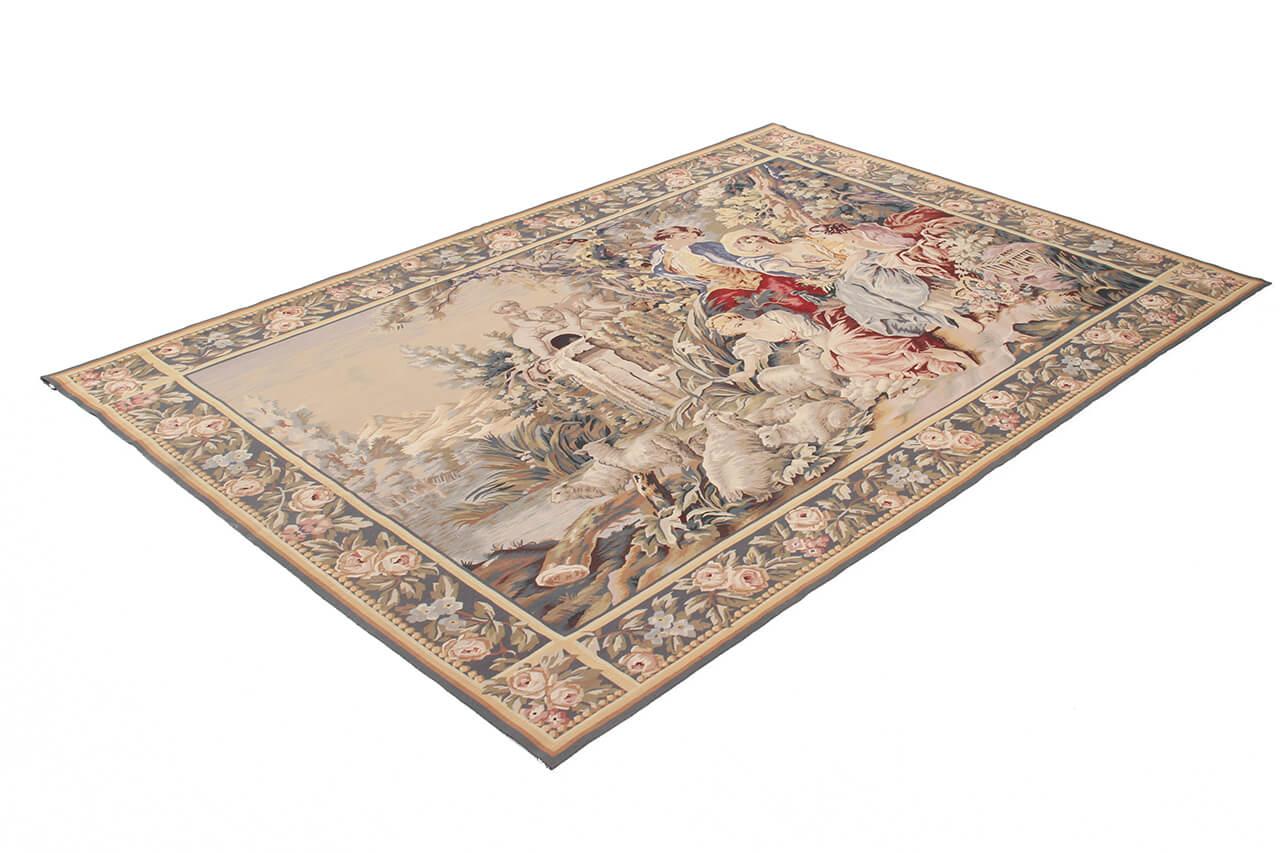
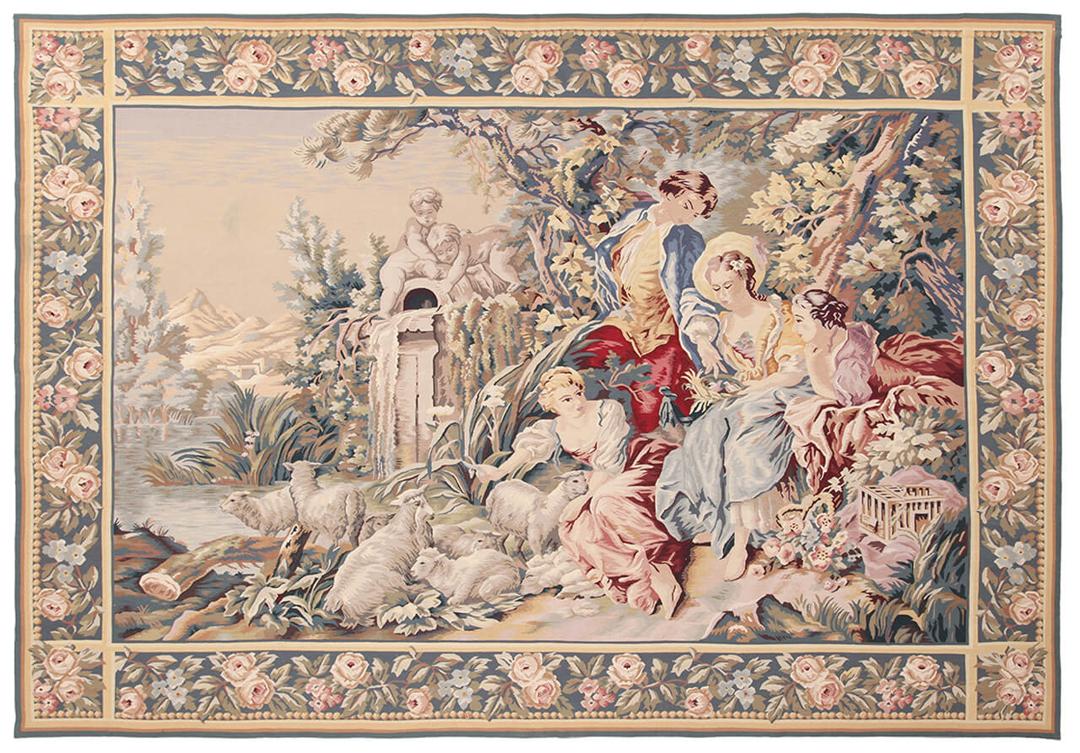
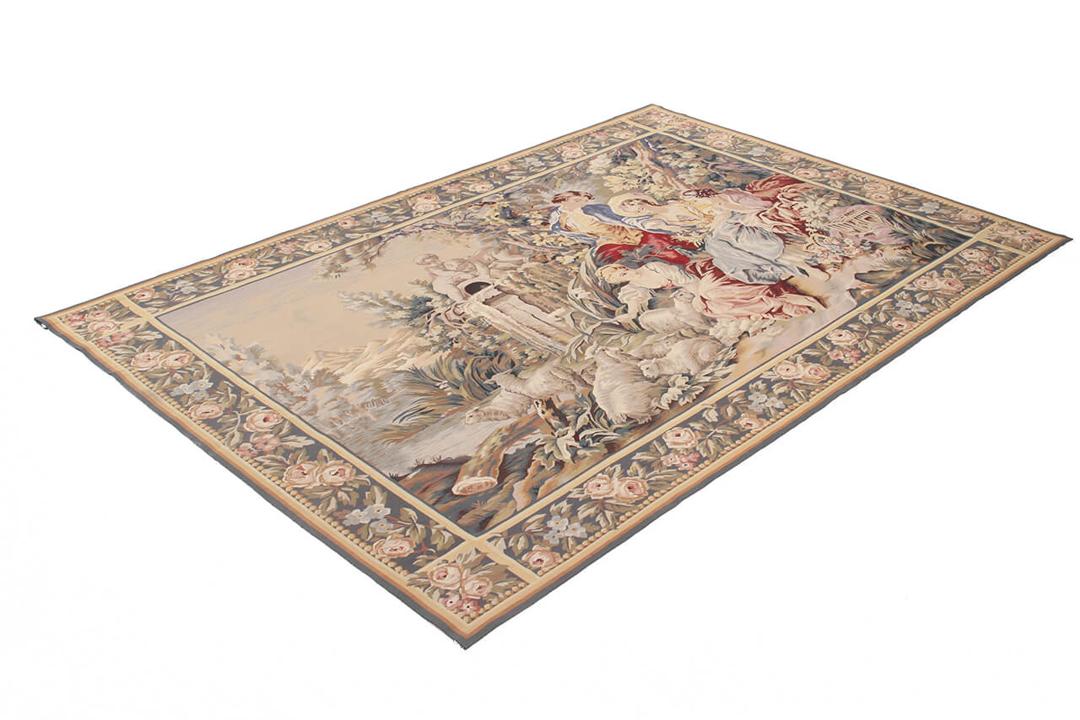
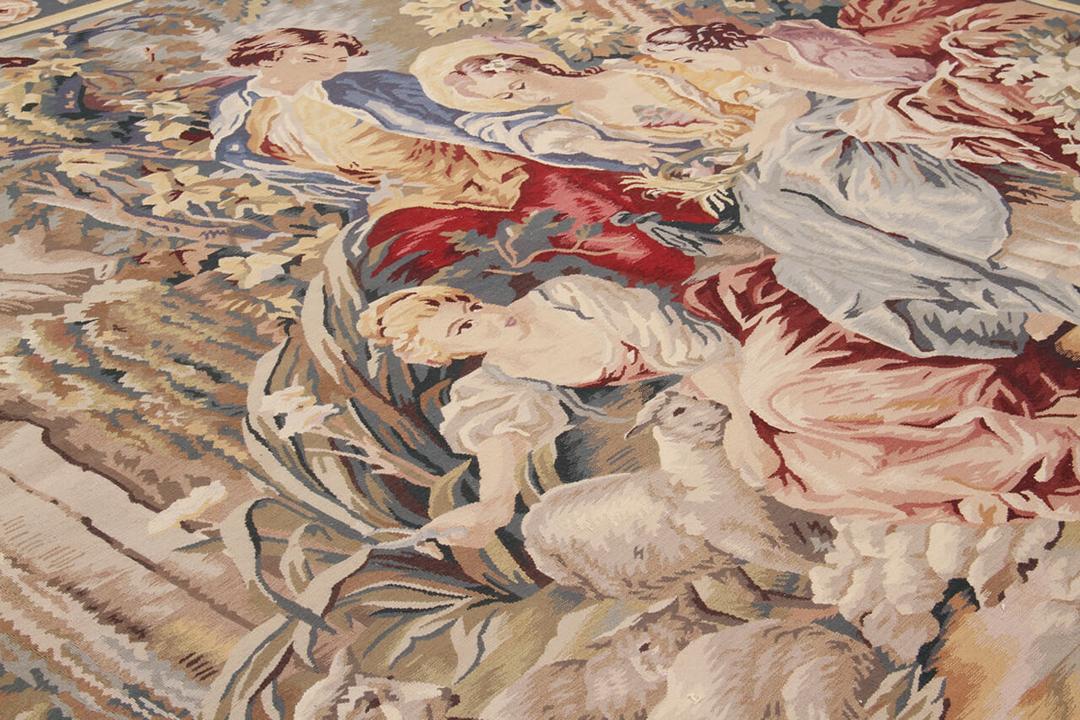
The Aubusson tradition traces its origins to the town of Aubusson in central France, where the craft of tapestry weaving flourished as early as the 15th century. These tapestries were historically commissioned by the aristocracy and royalty to adorn the walls of grand estates, depicting romanticised pastoral scenes, mythological tales, and intricate floral arrangements.
While the tradition began in France, the skill has since been adopted by master weavers globally, particularly in regions that have preserved the intricate flat-weaving techniques required to replicate such detailed imagery. This rug is a beautiful example of this historical migration, where the classic French aesthetic is combined with high-level technical proficiency.
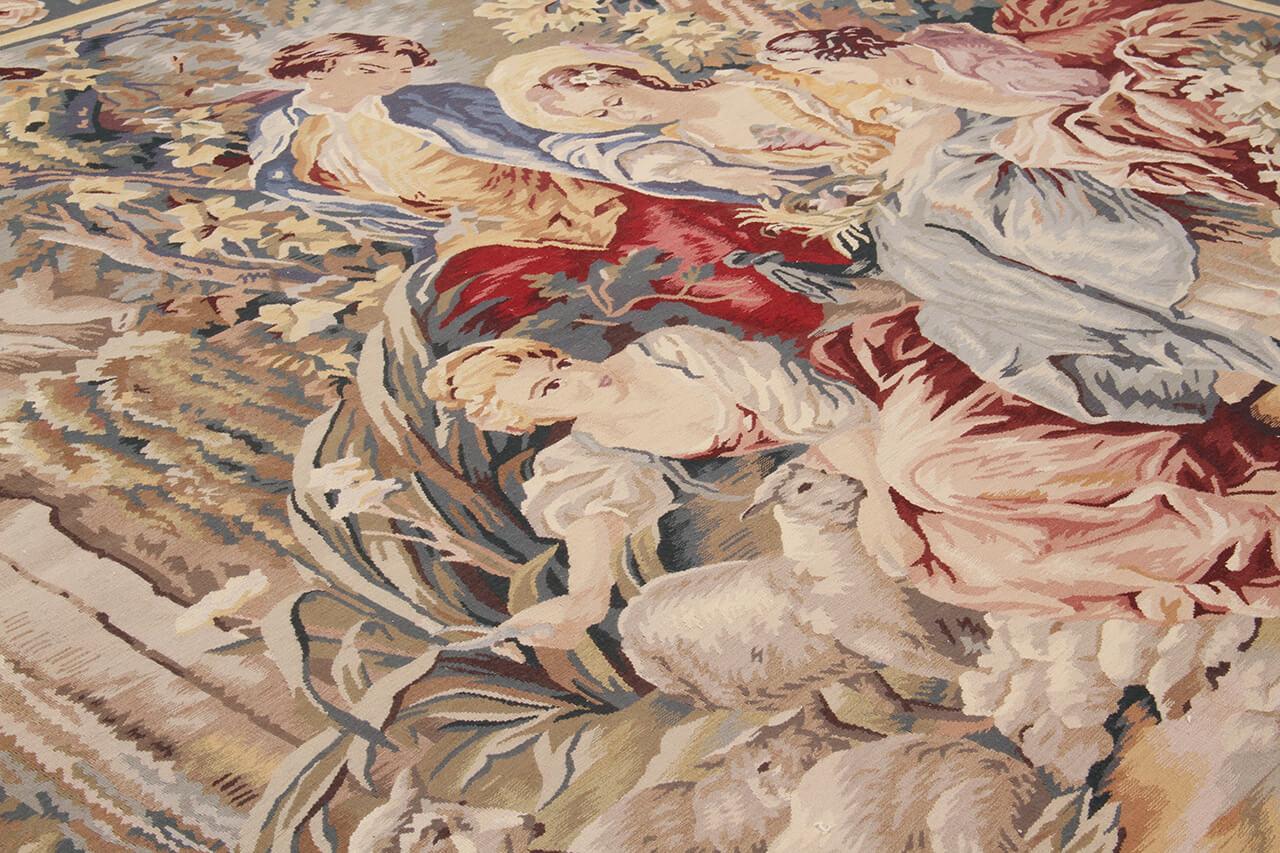
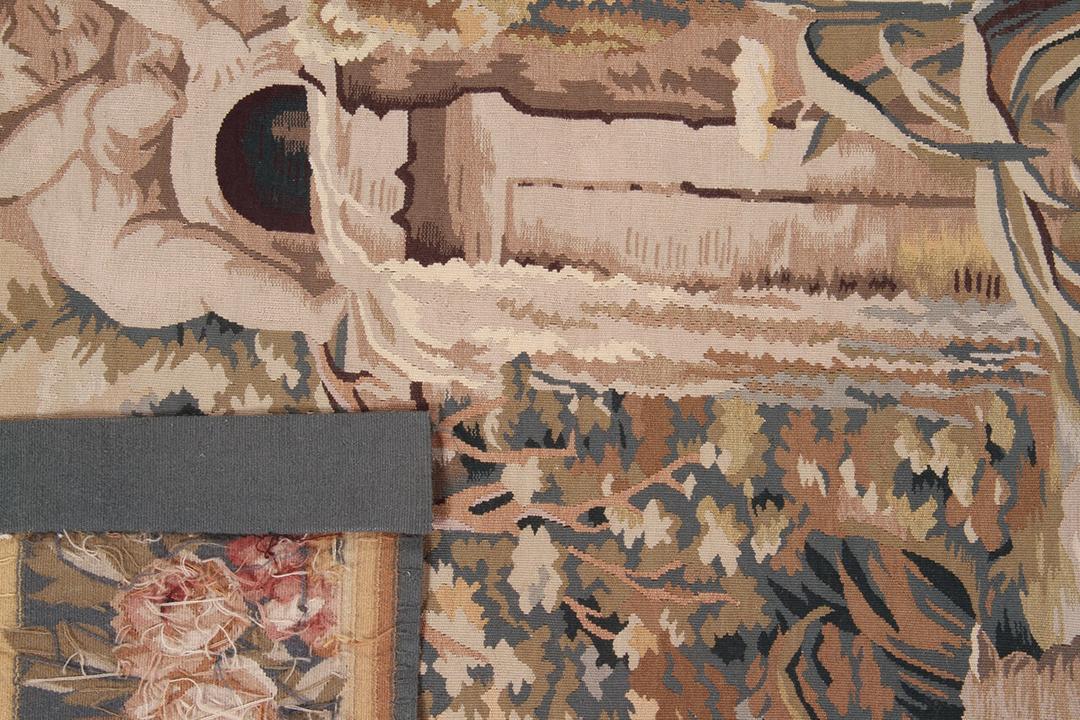
The visual language of an Aubusson-style piece is unmistakable, defined by its pictorial field and ornate, floral-heavy borders. The use of soft, harmonious tones to depict figures, lush landscapes, and decorative elements creates a sense of window-like depth, distinguishing these pieces from more abstract or geometric weaving traditions.
Owning an Aubusson-style rug is an investment in a storied design language that has been celebrated for centuries. These pieces are highly valued by collectors not only for their aesthetic beauty but for the immense skill required to translate painterly details into woven form, making them a testament to enduring craft and cultural history.