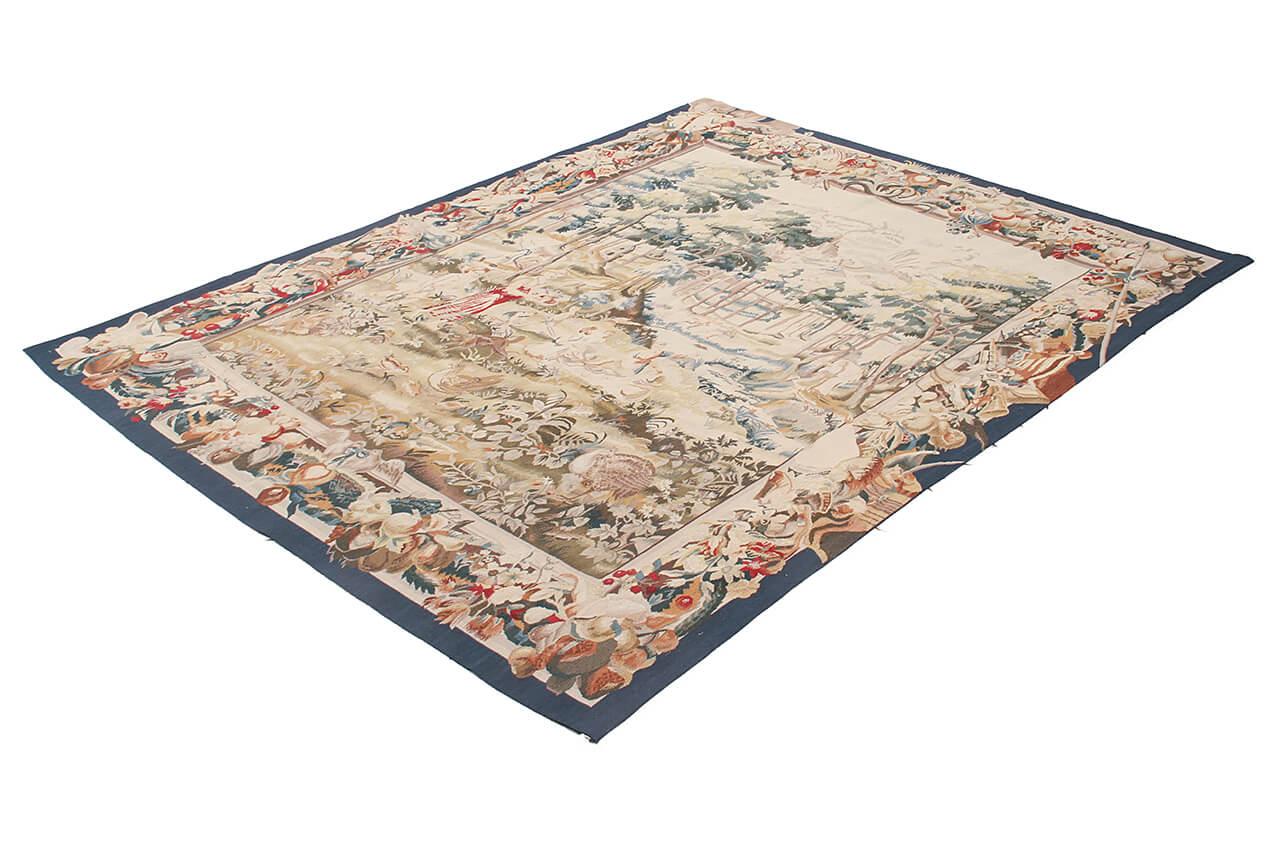
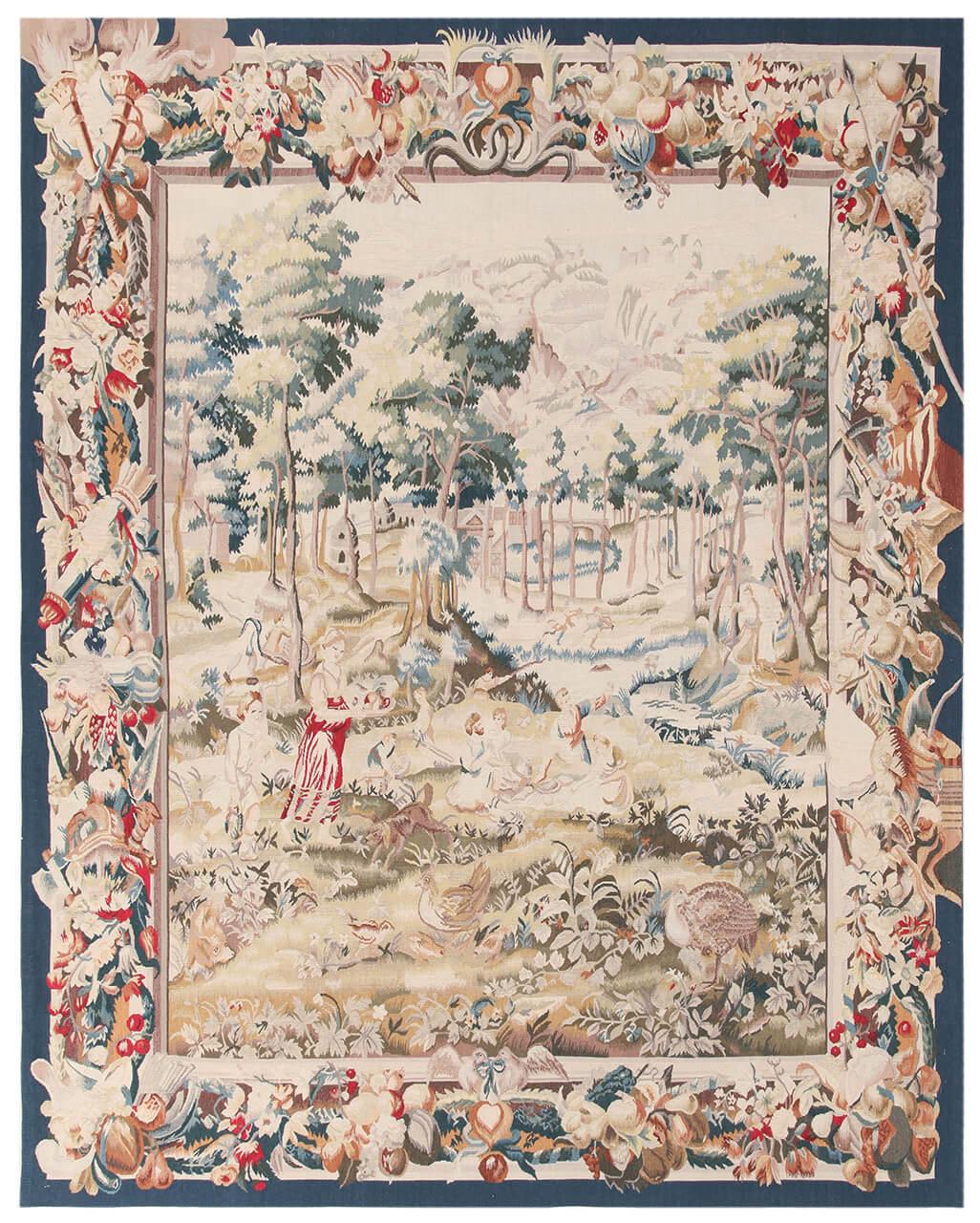
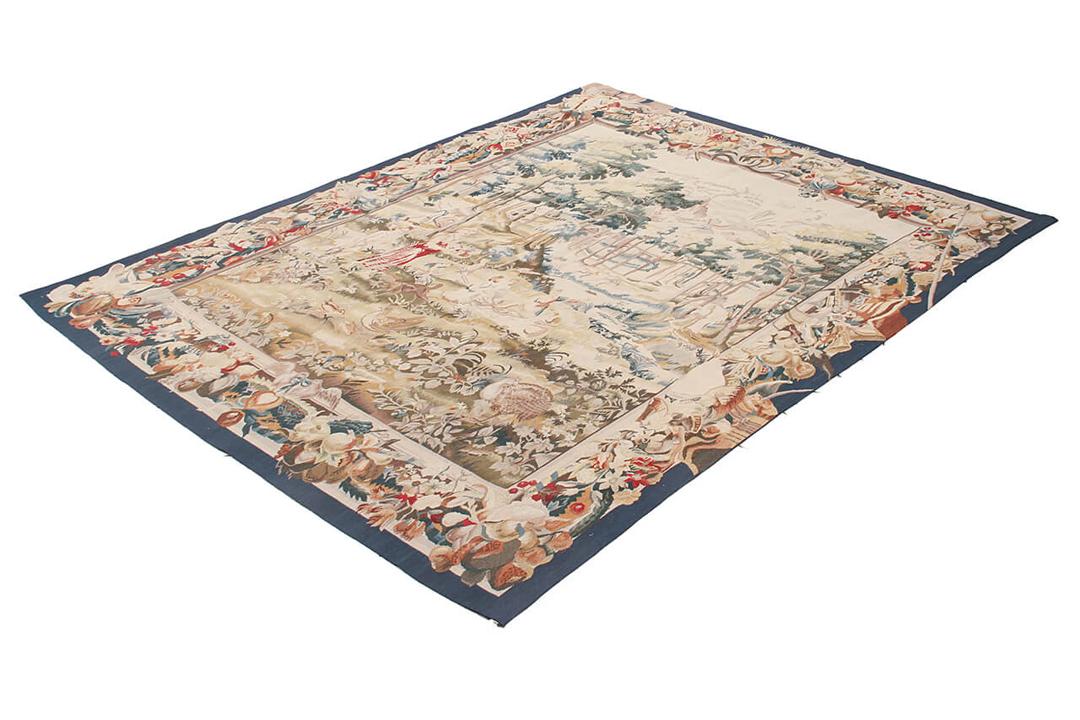
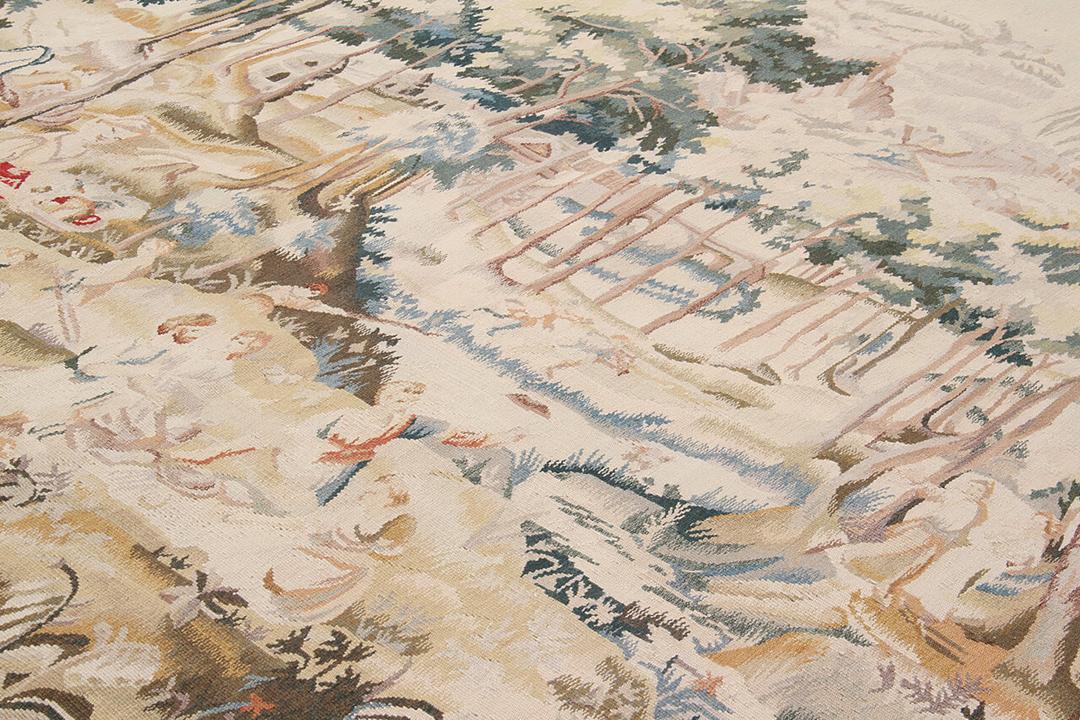
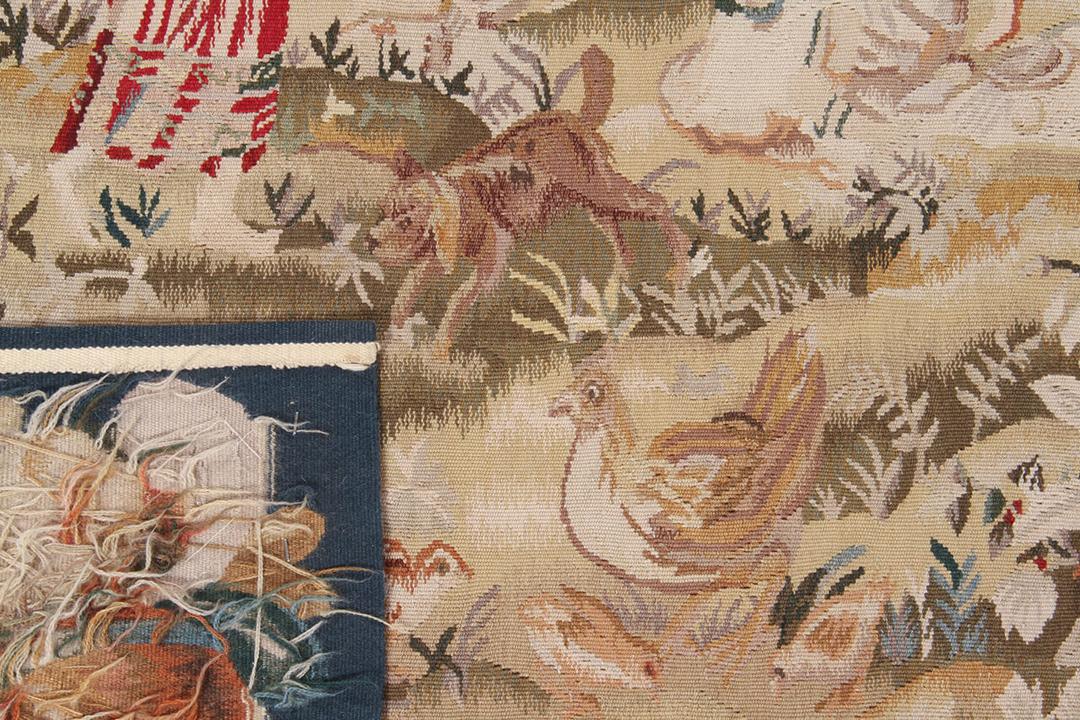
The Aubusson style finds its roots in the town of Aubusson, France, where the tradition of tapestry weaving flourished as early as the 15th century. Originally designed for the grand interiors of European nobility, these tapestries were celebrated for their ability to depict intricate landscapes, mythologies, and floral compositions with painterly precision.
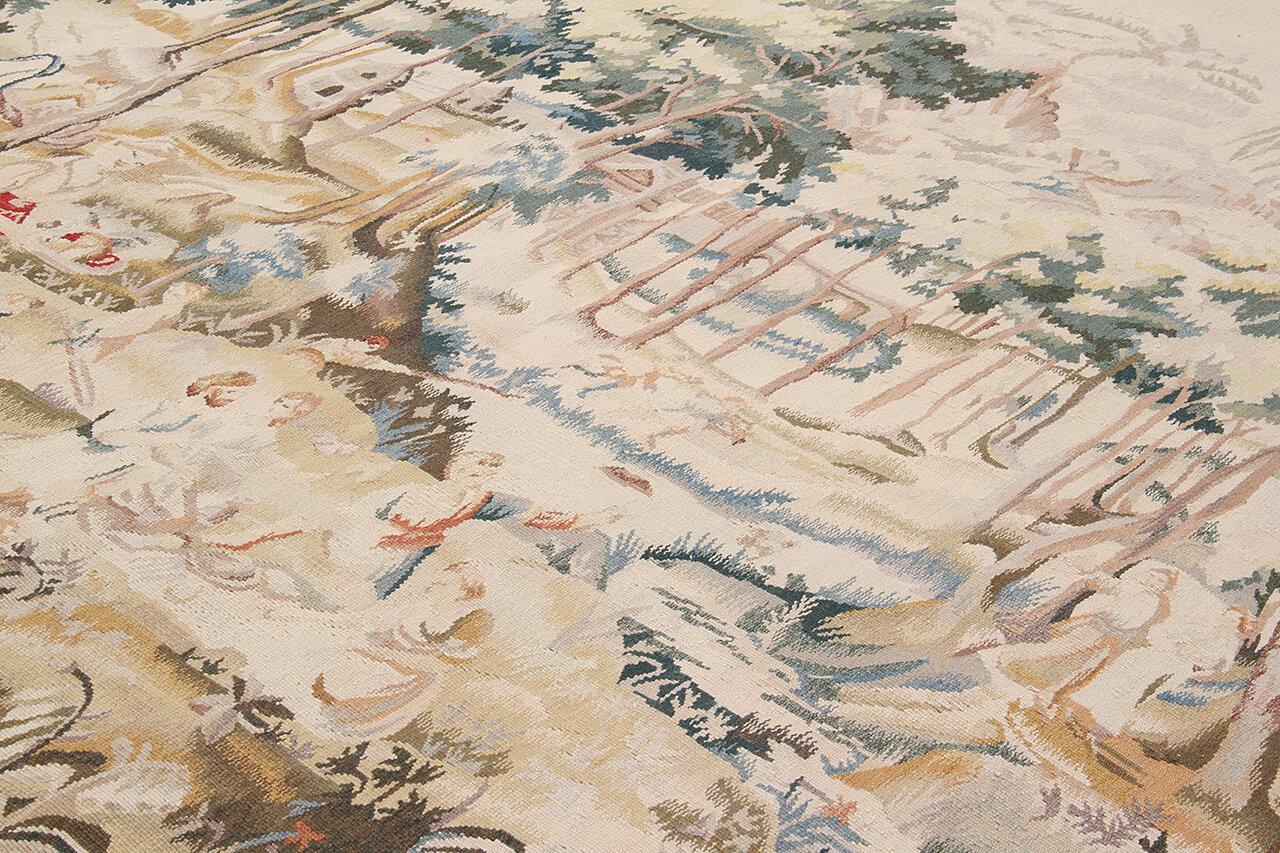
Technically, an Aubusson-style rug is distinct from knotted pile rugs because it is a flat-weave tapestry. This means the design is created by weaving the coloured weft threads directly through the foundation, resulting in a smooth, durable surface. This method requires a high level of skill to manage the complex colour shifts and curves necessary to bring a pictorial scene to life.
The signature design elements of this style include highly detailed, often idyllic scenes framed by ornate, lush floral borders. These borders act as a frame for the central story, providing a sense of depth and focus. The use of natural motifs, such as birds, trees, and figures, is central to the Aubusson aesthetic, reflecting a historical fascination with the natural world.
Owning an Aubusson-style piece is a way to connect with centuries of artistic heritage. These rugs are highly valued by collectors not only for their beauty but for the immense skill required to execute such complex imagery without the use of a pile. It represents a commitment to fine craftsmanship and a love for the narrative power of textile art.