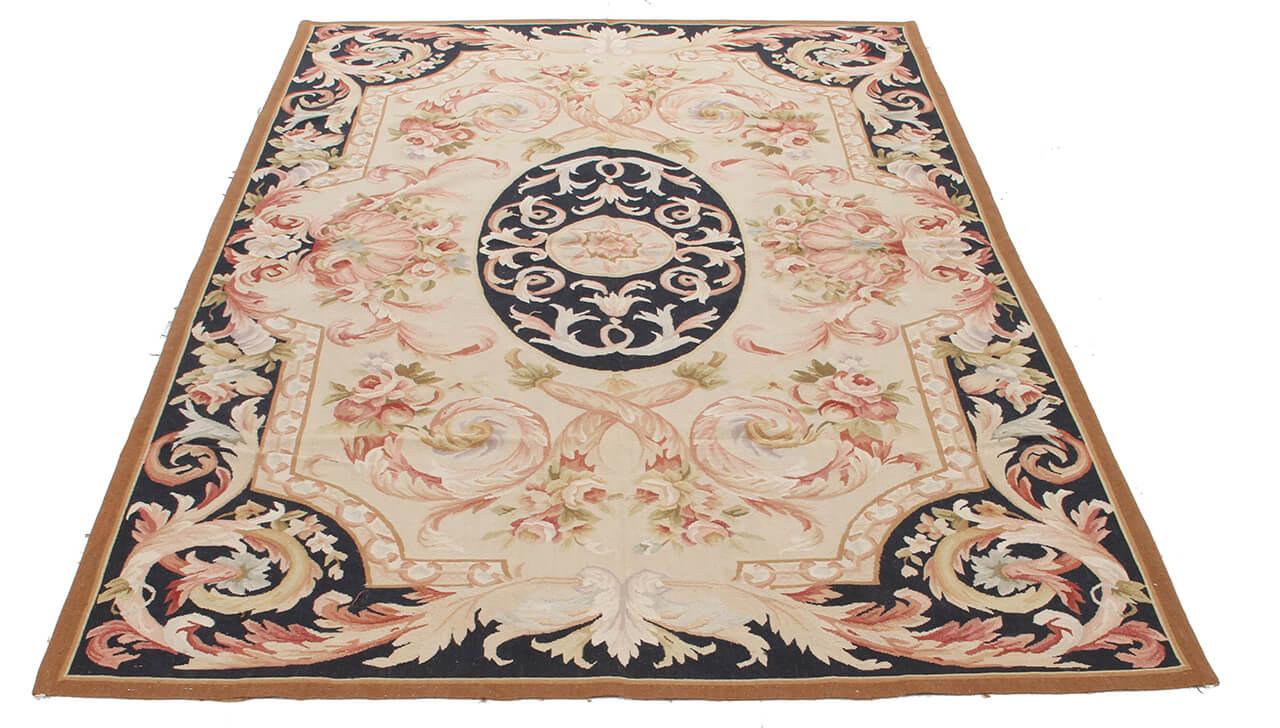
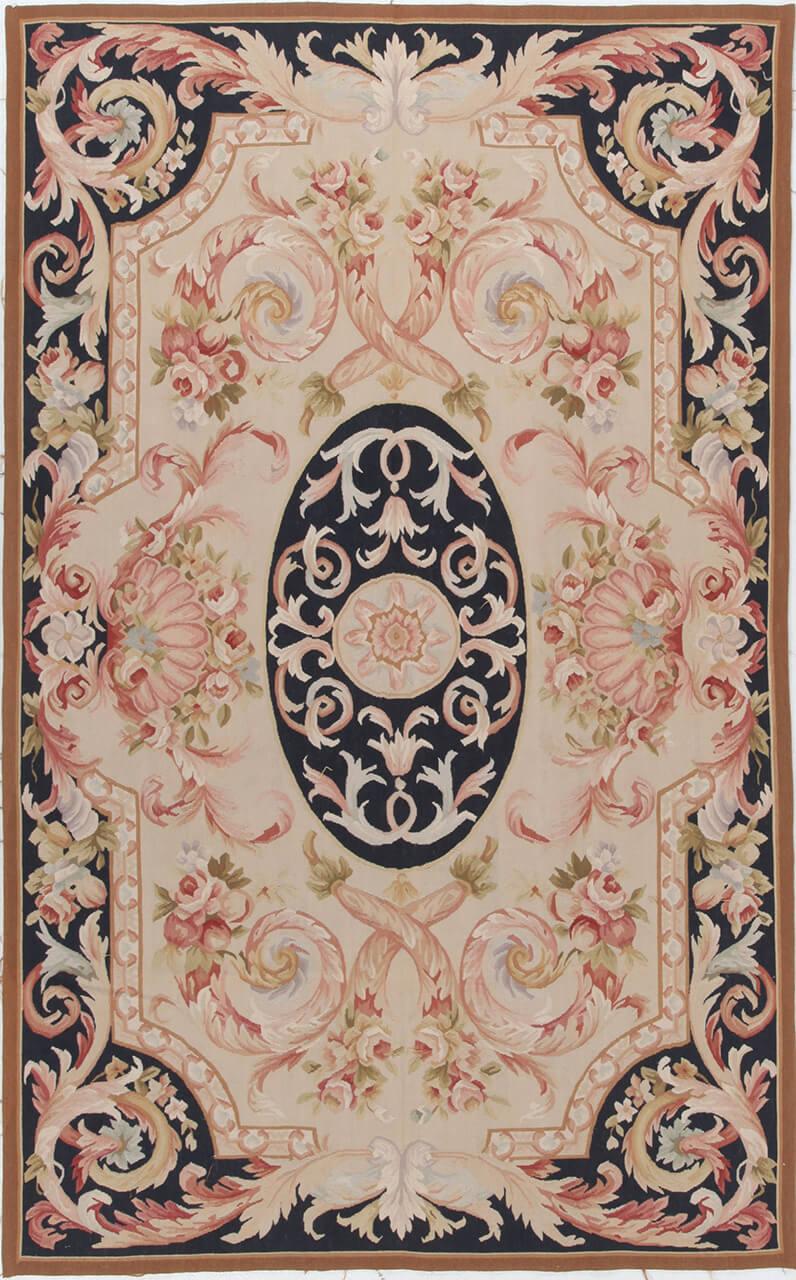
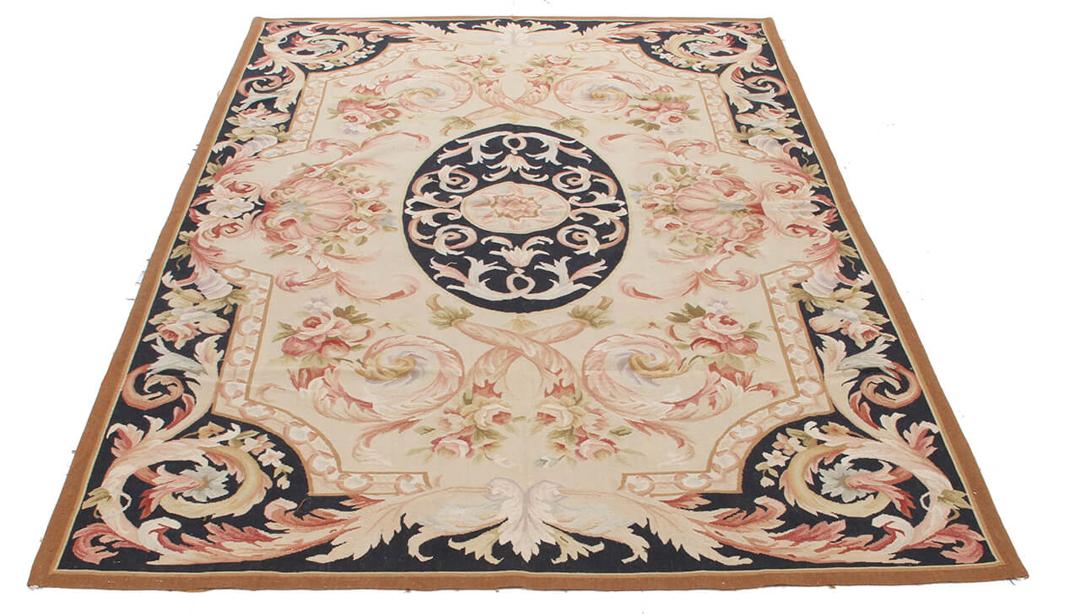
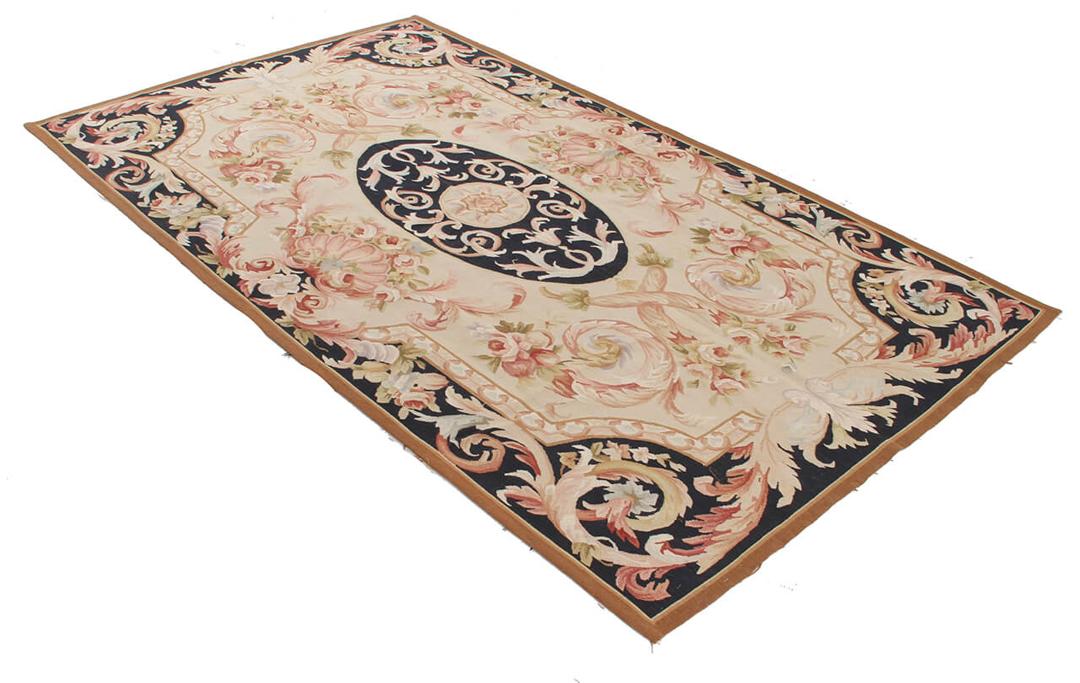
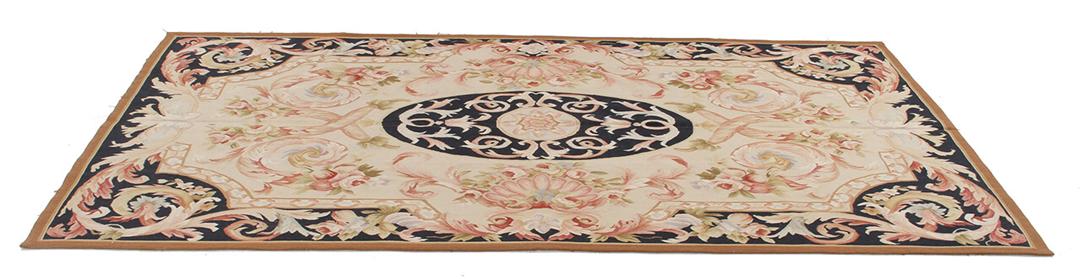
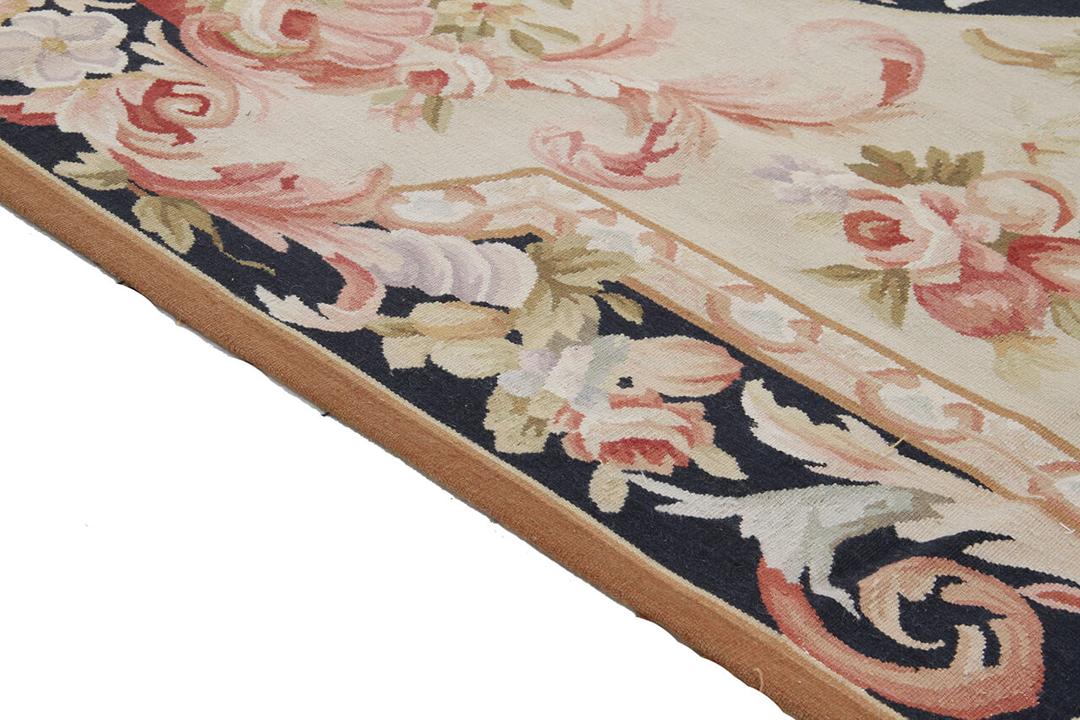
The Aubusson tradition originated in the town of Aubusson in central France, where it became world-renowned for creating elaborate tapestries and flat-woven rugs for the aristocracy and royal courts. Over centuries, these designs became synonymous with French elegance, characterised by their detailed floral bouquets, scrolls, and neoclassical patterns.
While the style was born in France, the tradition of weaving these flat-woven masterpieces has evolved and spread globally. Today, skilled artisans in regions like China have mastered these complex techniques, applying their own regional expertise to carry forward the historical legacy of the Aubusson aesthetic, ensuring these intricate designs remain accessible to those who appreciate refined craftsmanship.
The key to the signature look of these rugs lies in their flat-weave construction, which creates a smooth, tapestry-like surface. Unlike pile rugs, these pieces rely on the precision of the weave itself to define the patterns, borders, and medallions. This method requires a high degree of technical mastery to ensure that the intricate floral elements and ornate borders remain crisp and clearly defined across the entire surface.
Collectors value these rugs not only for their historical associations with European luxury but for the immense skill required to produce them. Owning a piece in this tradition is a way to connect with a long-standing history of textile art, where each pattern tells a story of artistic influence and careful, manual dedication.