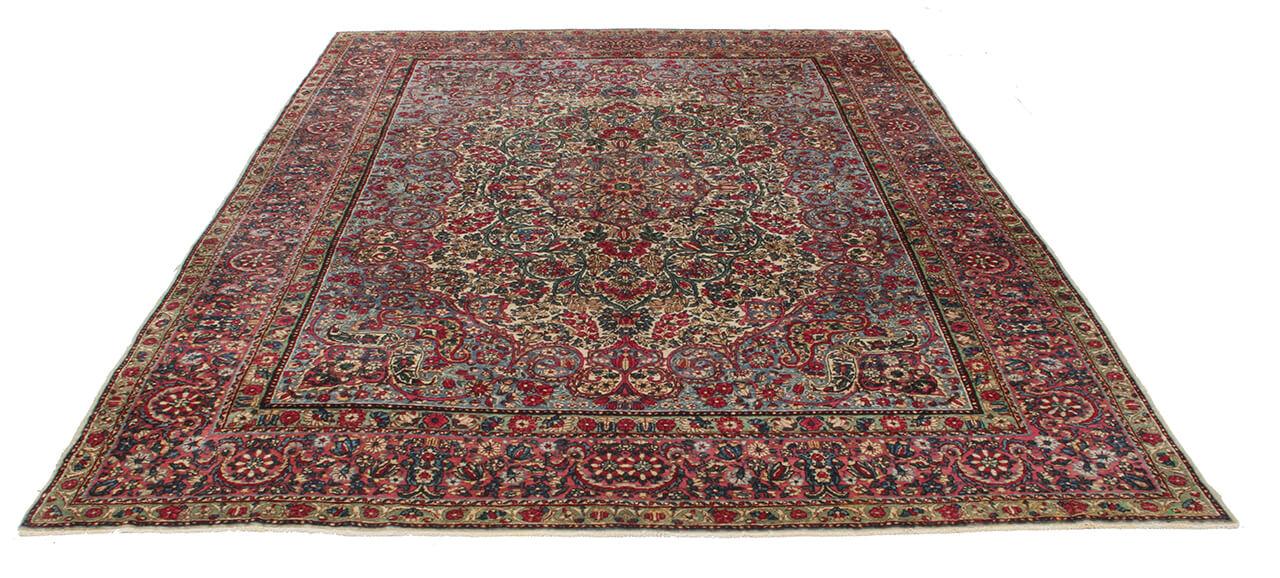
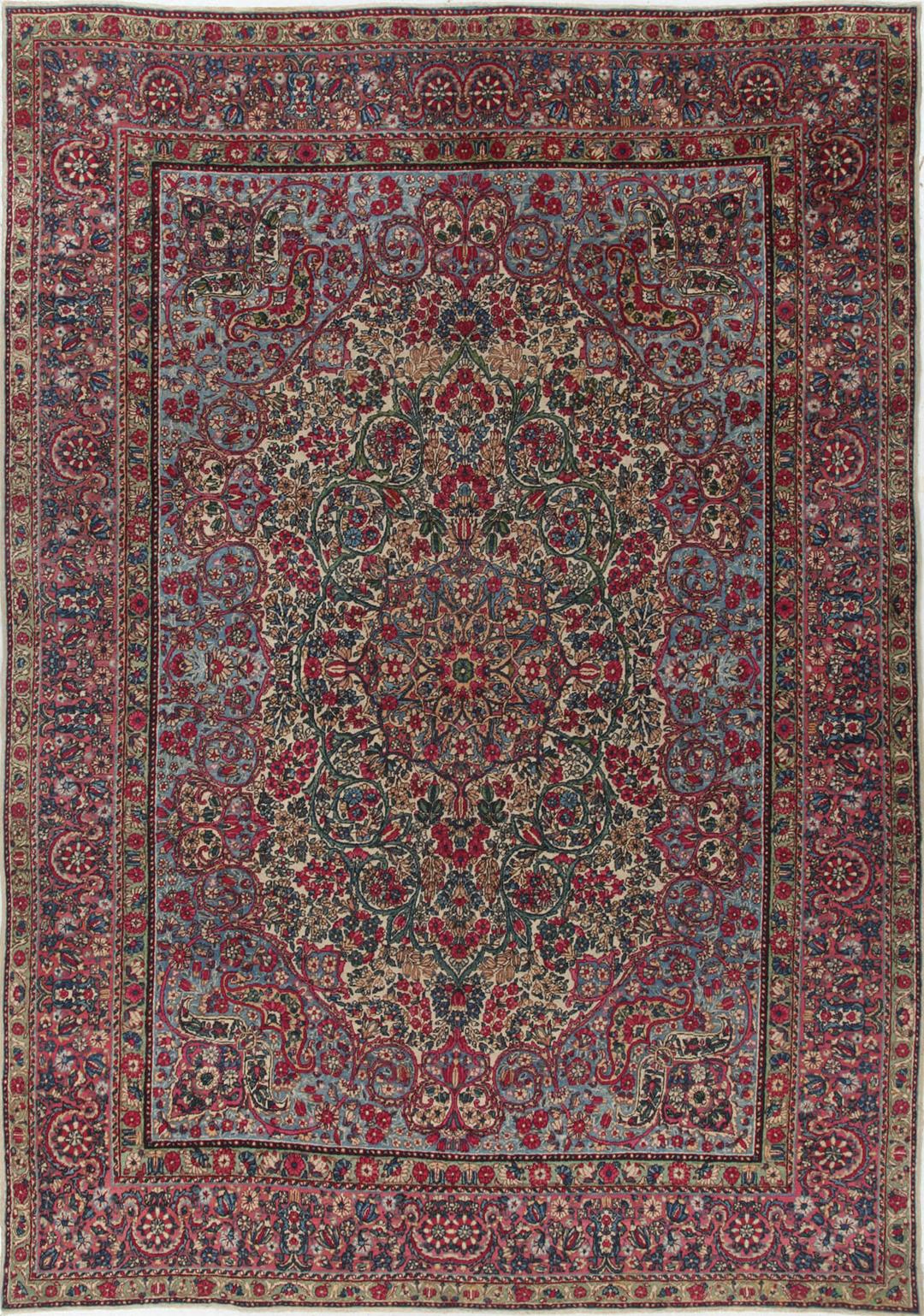
Kerman rugs originate from the historic city of Kerman in the arid south-central region of Persia, an area long celebrated for its sophisticated textile traditions. For centuries, workshops in this region have produced some of the most refined floor coverings in the world, drawing on desert aesthetics and fertile garden imagery to inspire their designs.
The craft of Kerman weaving relies on master artisans who pass down precise knotting techniques through generations. Using traditional upright looms, weavers tie each knot by hand with exceptional precision, a demanding skill that allows for the creation of exceptionally detailed floral compositions and curved motifs.
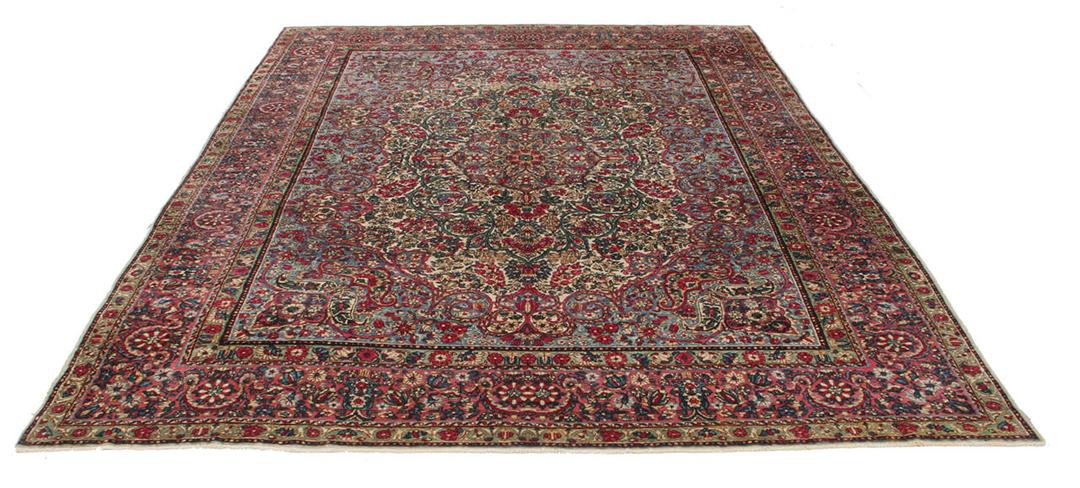
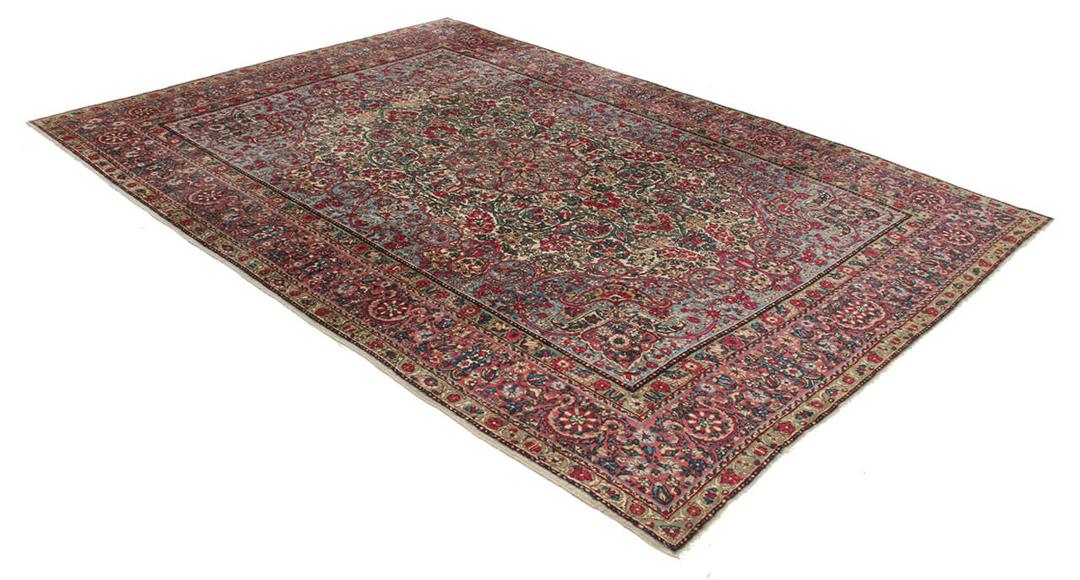
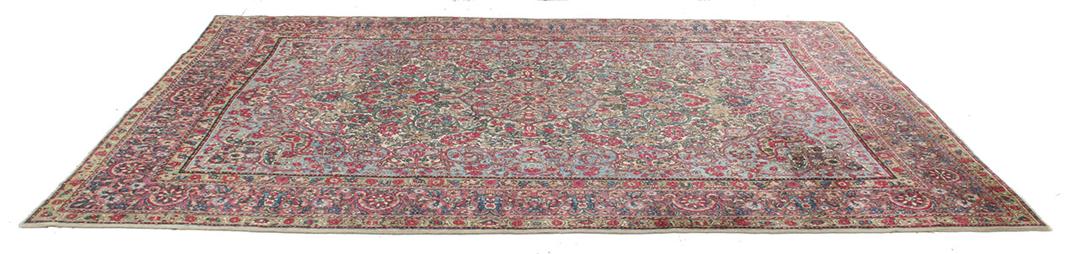
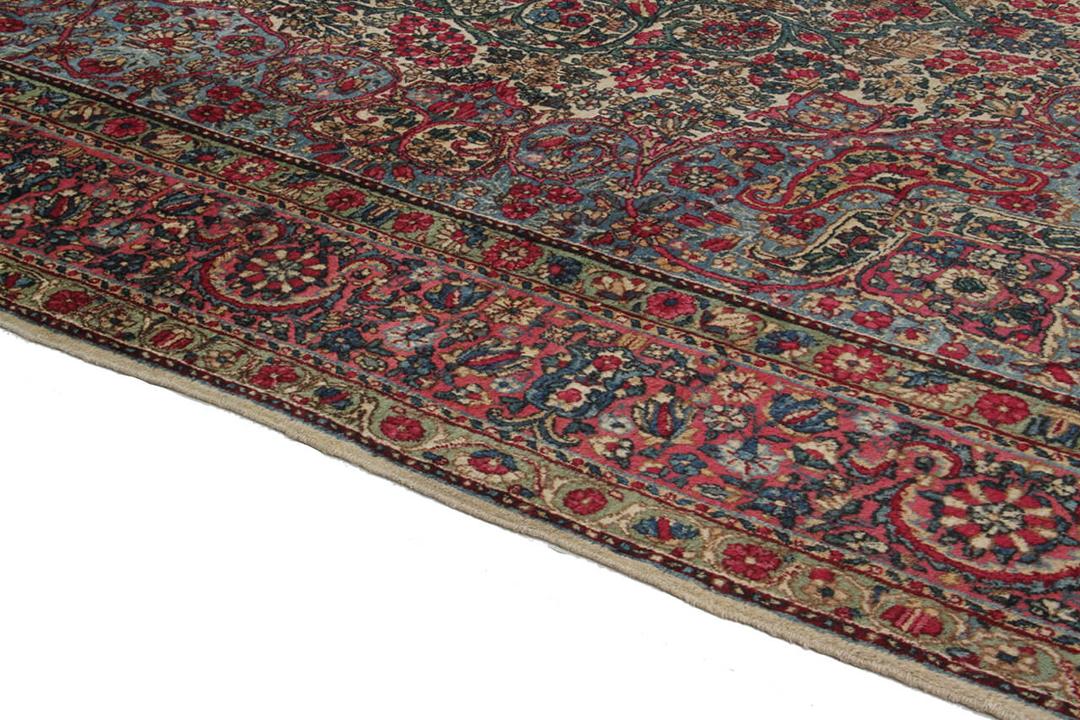
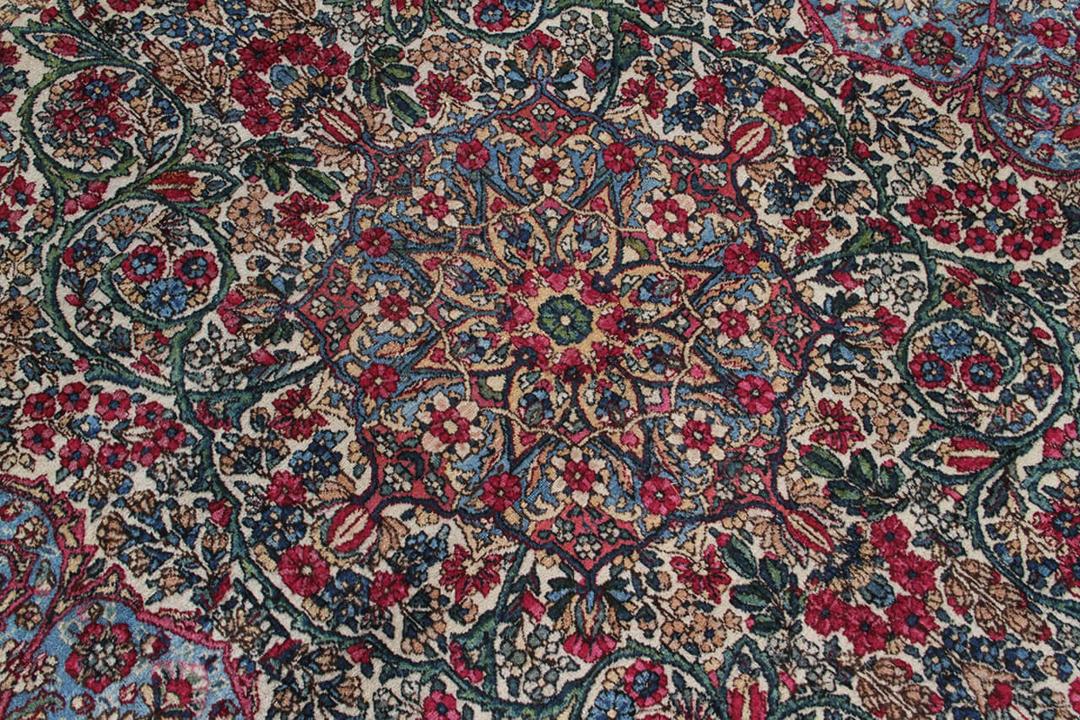
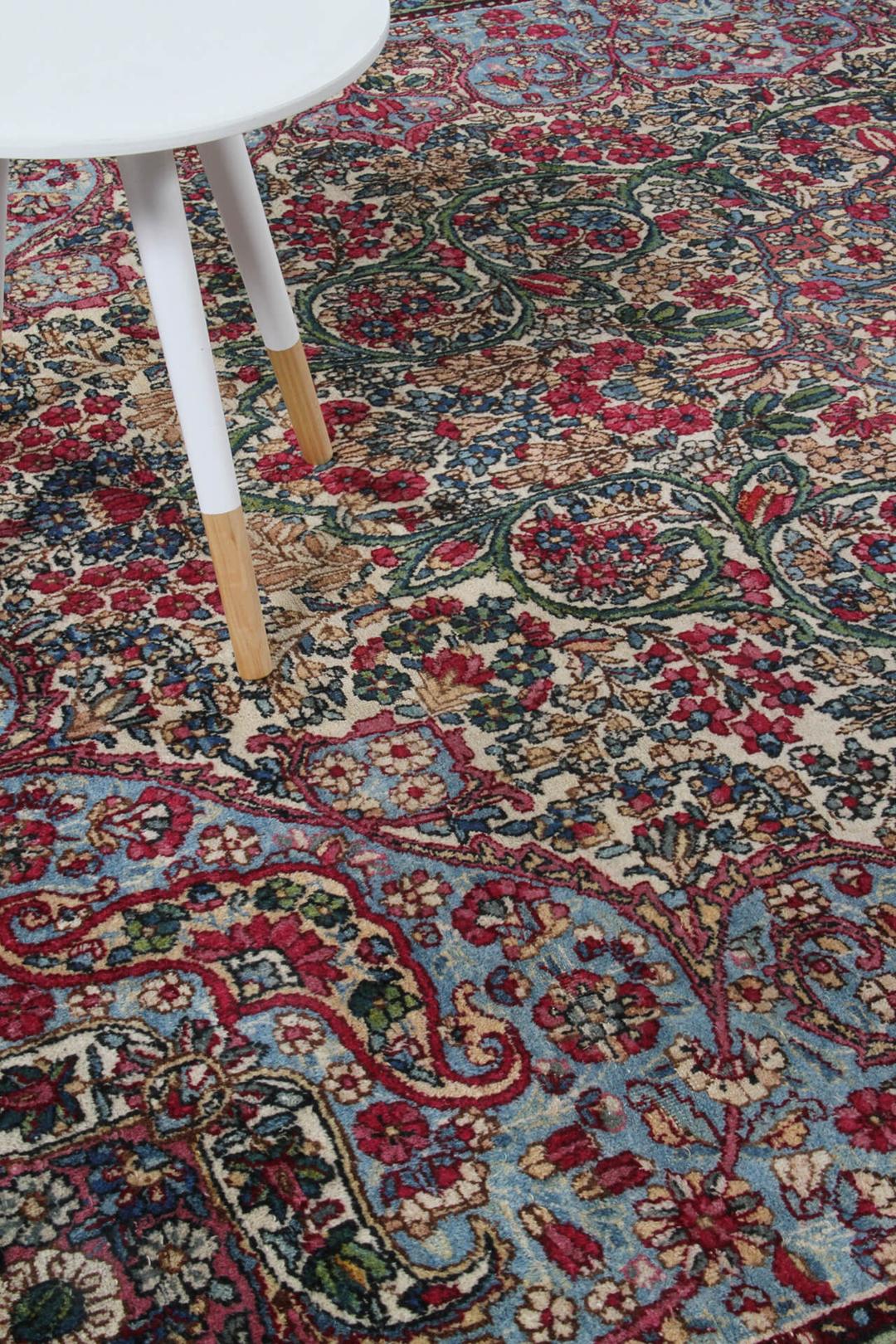
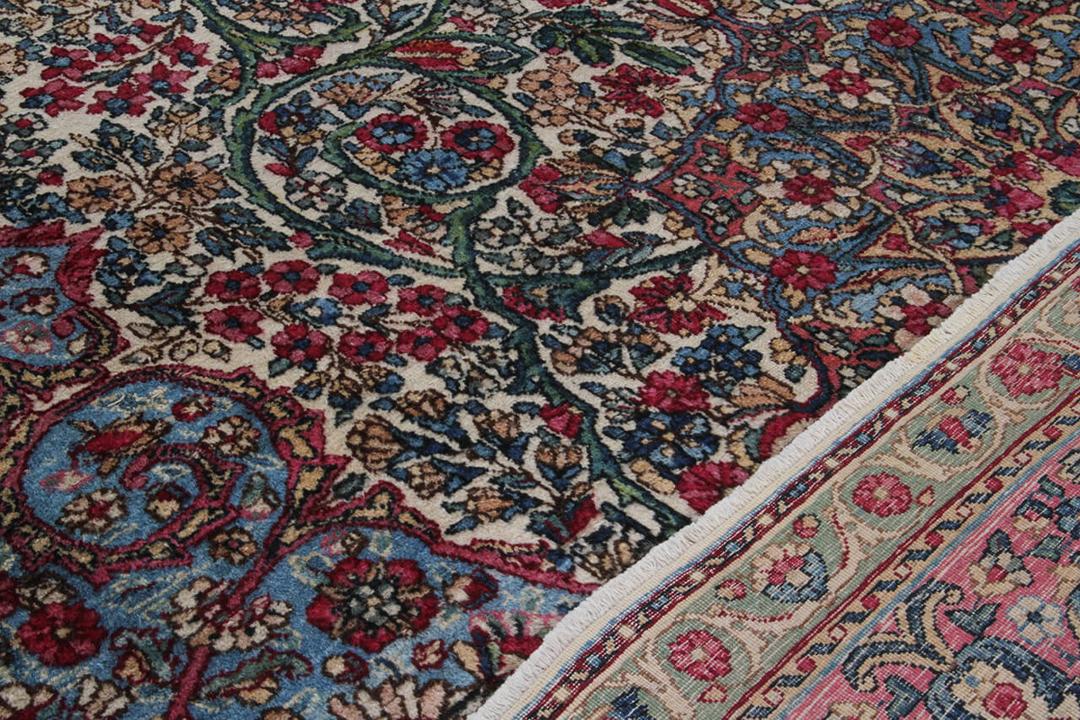
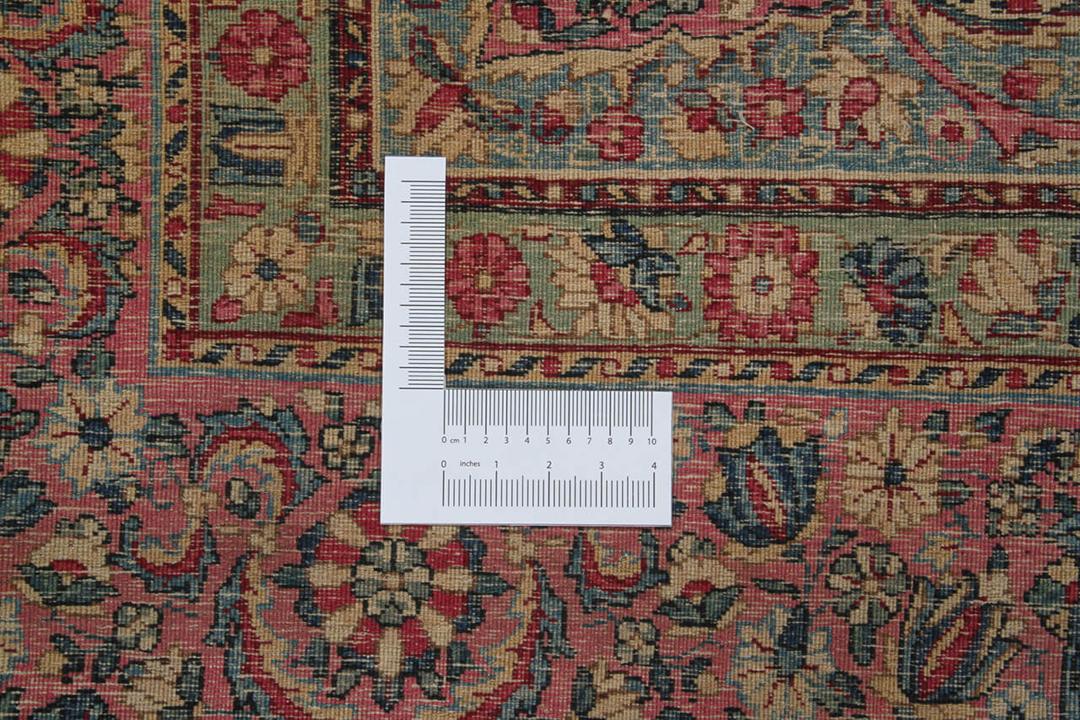
The visual language of classic Kerman rugs is defined by elaborate central medallions surrounded by flowing botanical motifs, palmettes, and layered decorative borders. In this particular antique piece, rich reds and deep blues interact within a sophisticated floral arrangement that showcases the signature elegance of the Kerman tradition.
Collecting antique rugs from this historic region offers a tangible connection to centuries of human artistry. Owning a piece of this age means preserving a fragment of cultural heritage, valued by collectors and enthusiasts for its superior craftsmanship, enduring materials, and unmistakable artistic identity.