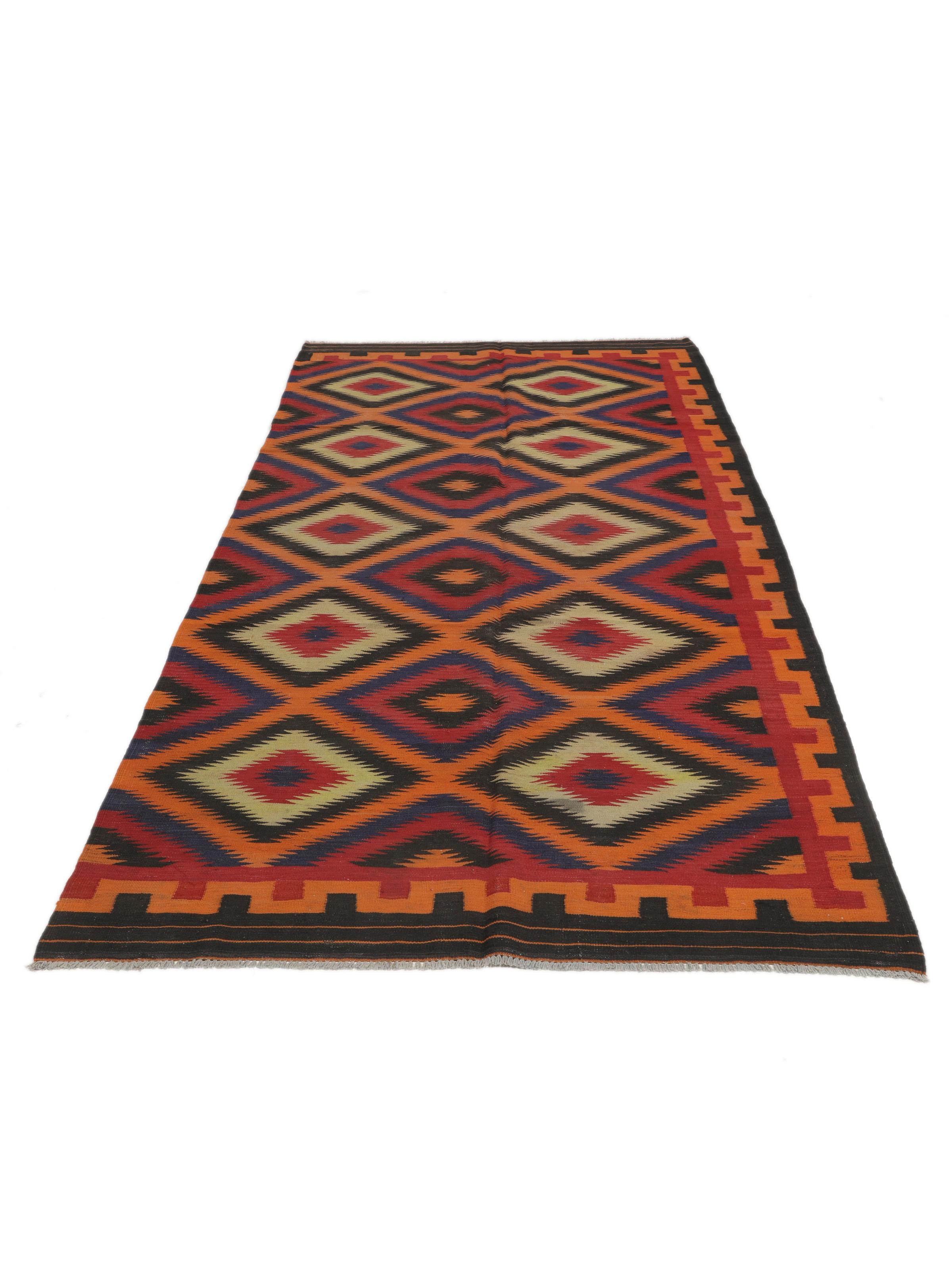
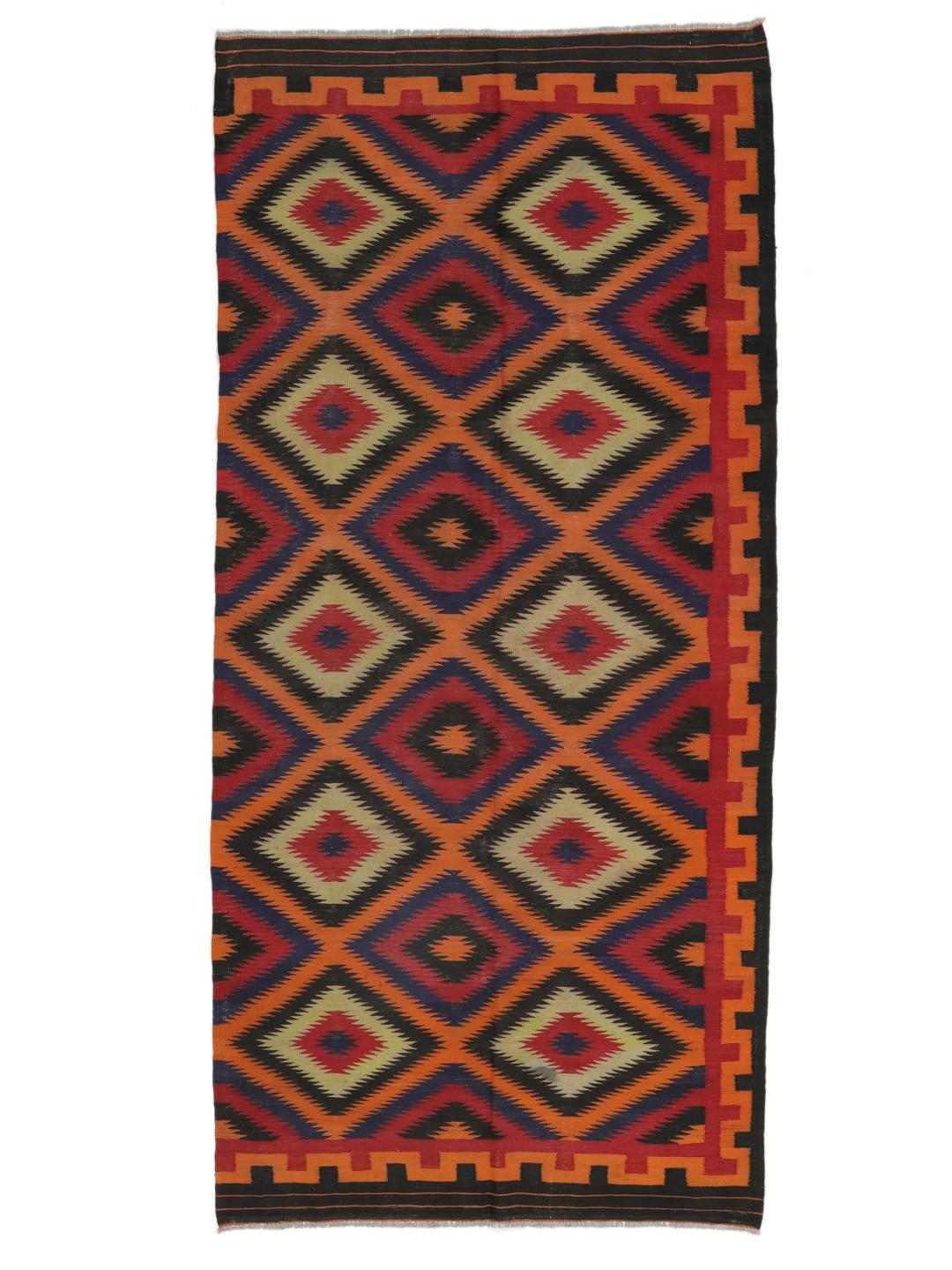
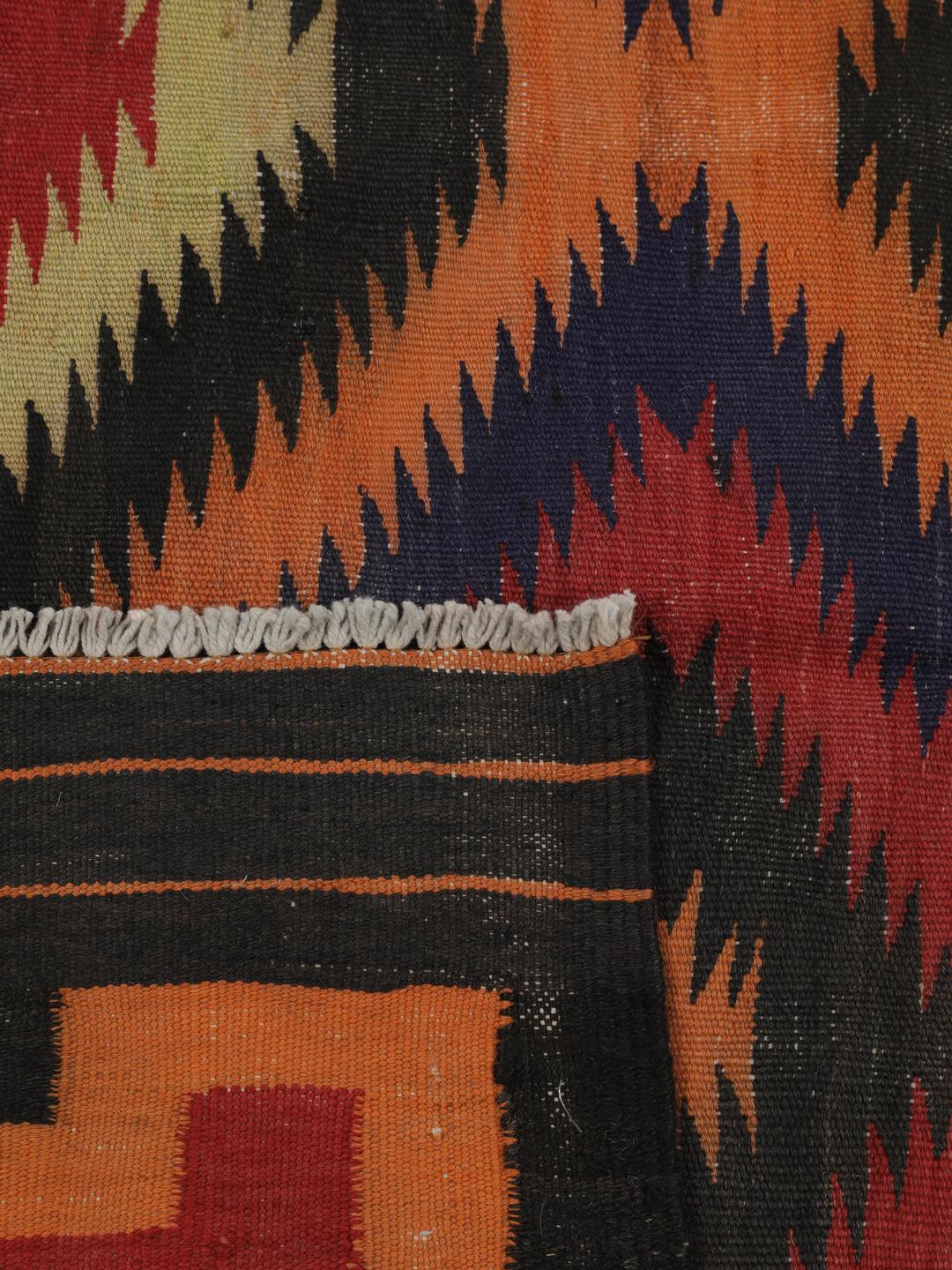
Kelim rugs originate from the nomadic and village traditions of the Middle East and Central Asia. They have been woven for centuries as versatile, durable floor coverings, wall hangings, and functional items like saddlebags. The name itself reflects the flat-woven technique, which distinguishes these rugs from their pile-knotted counterparts.
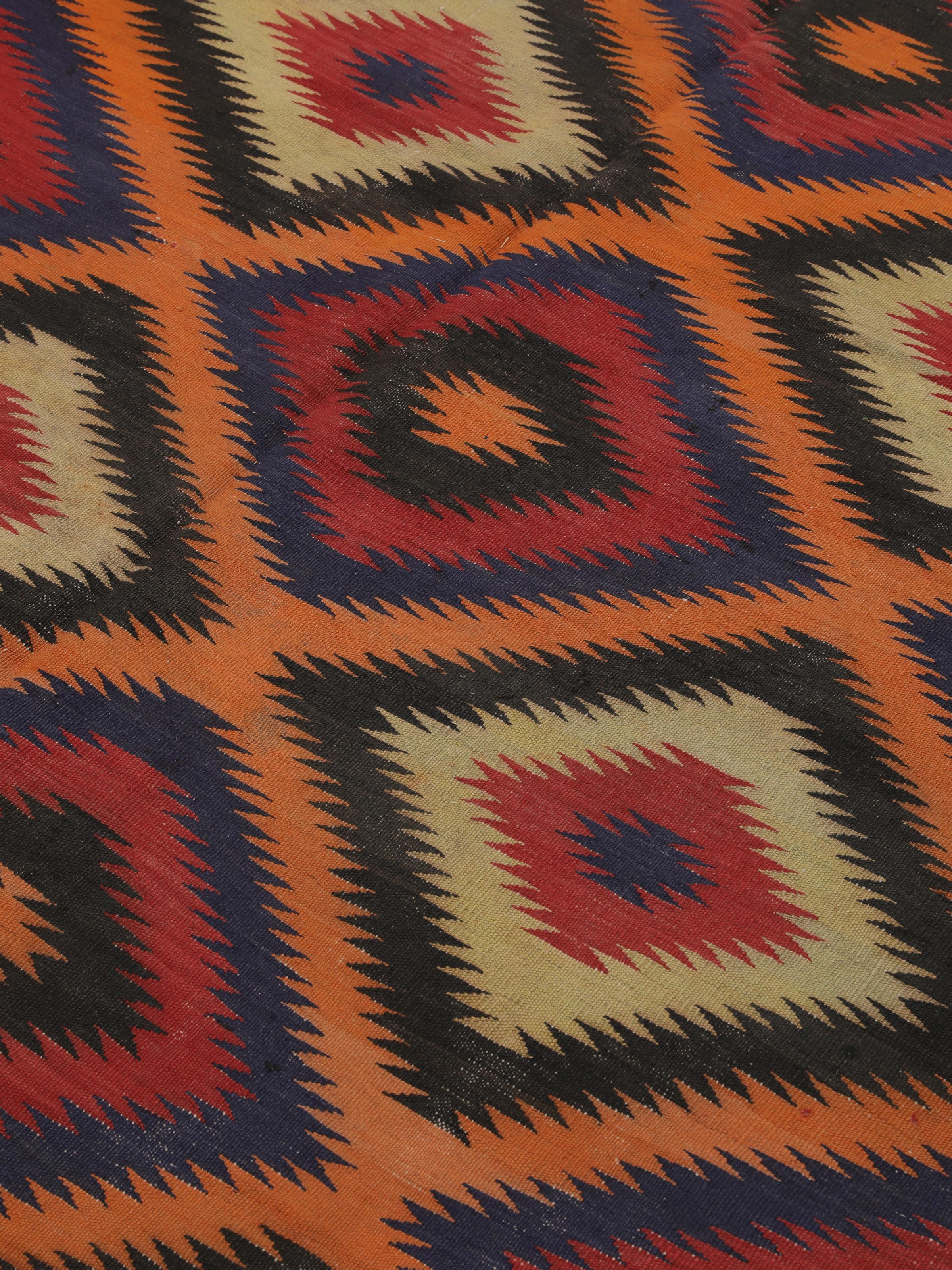
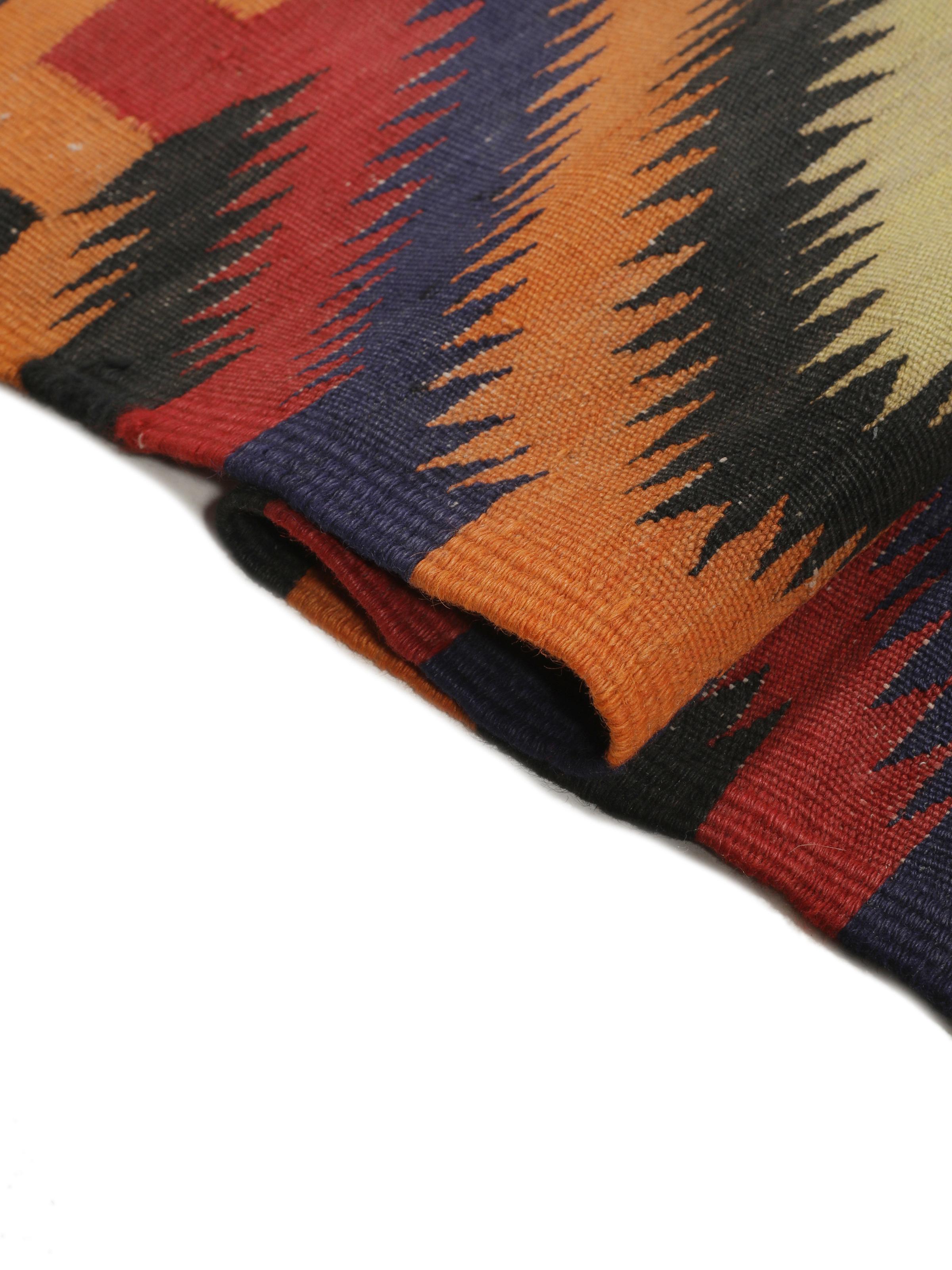
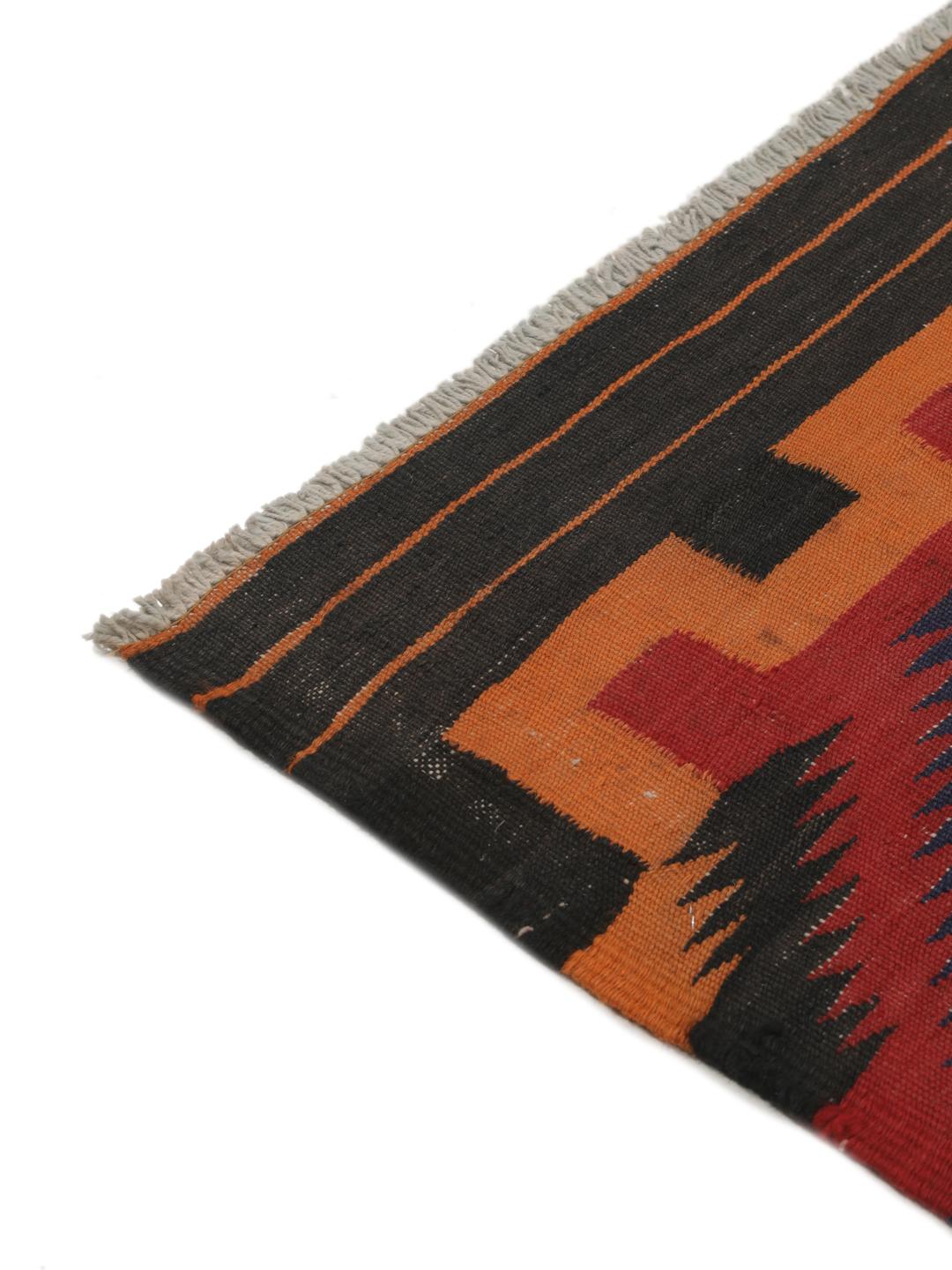
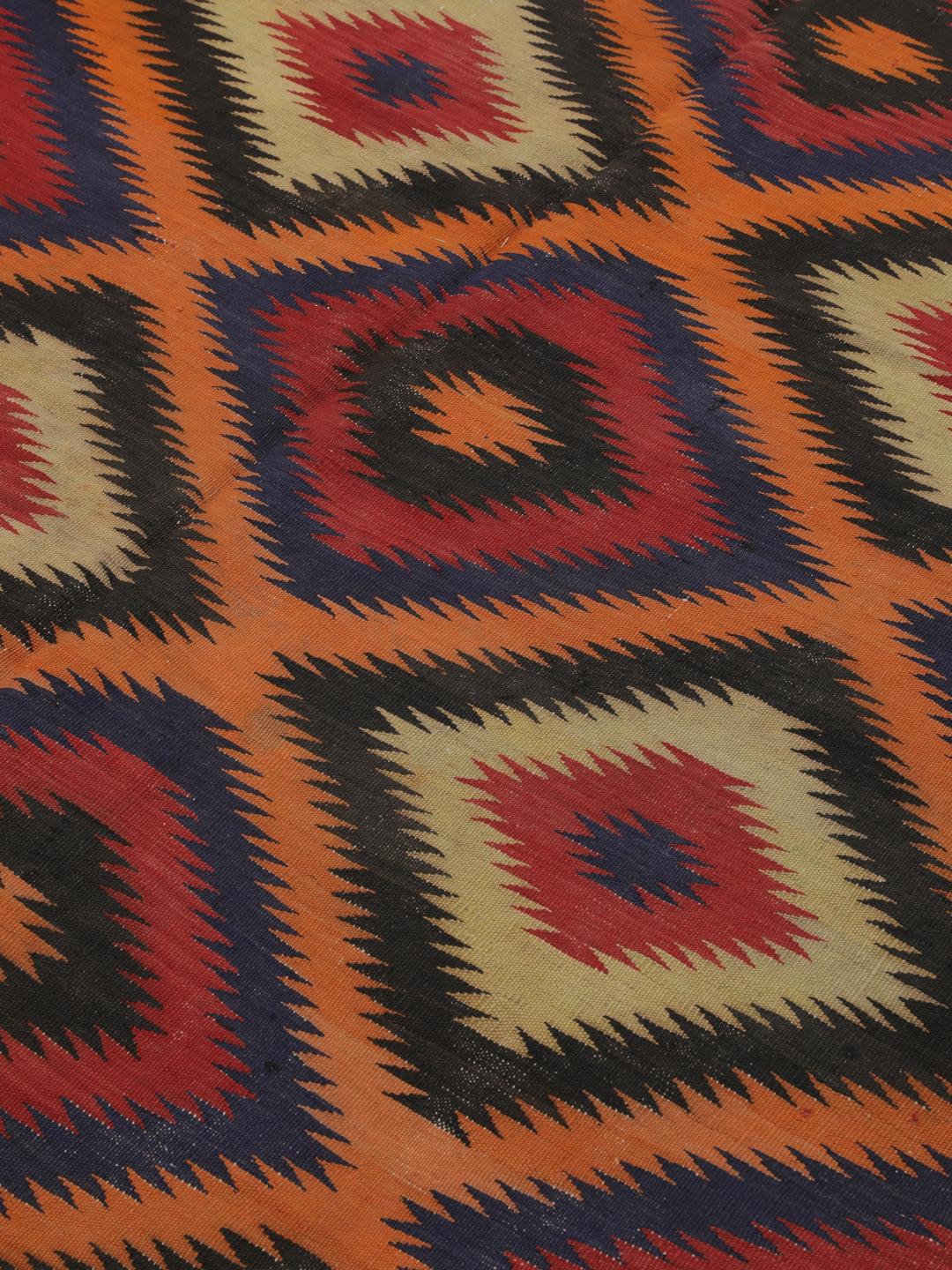
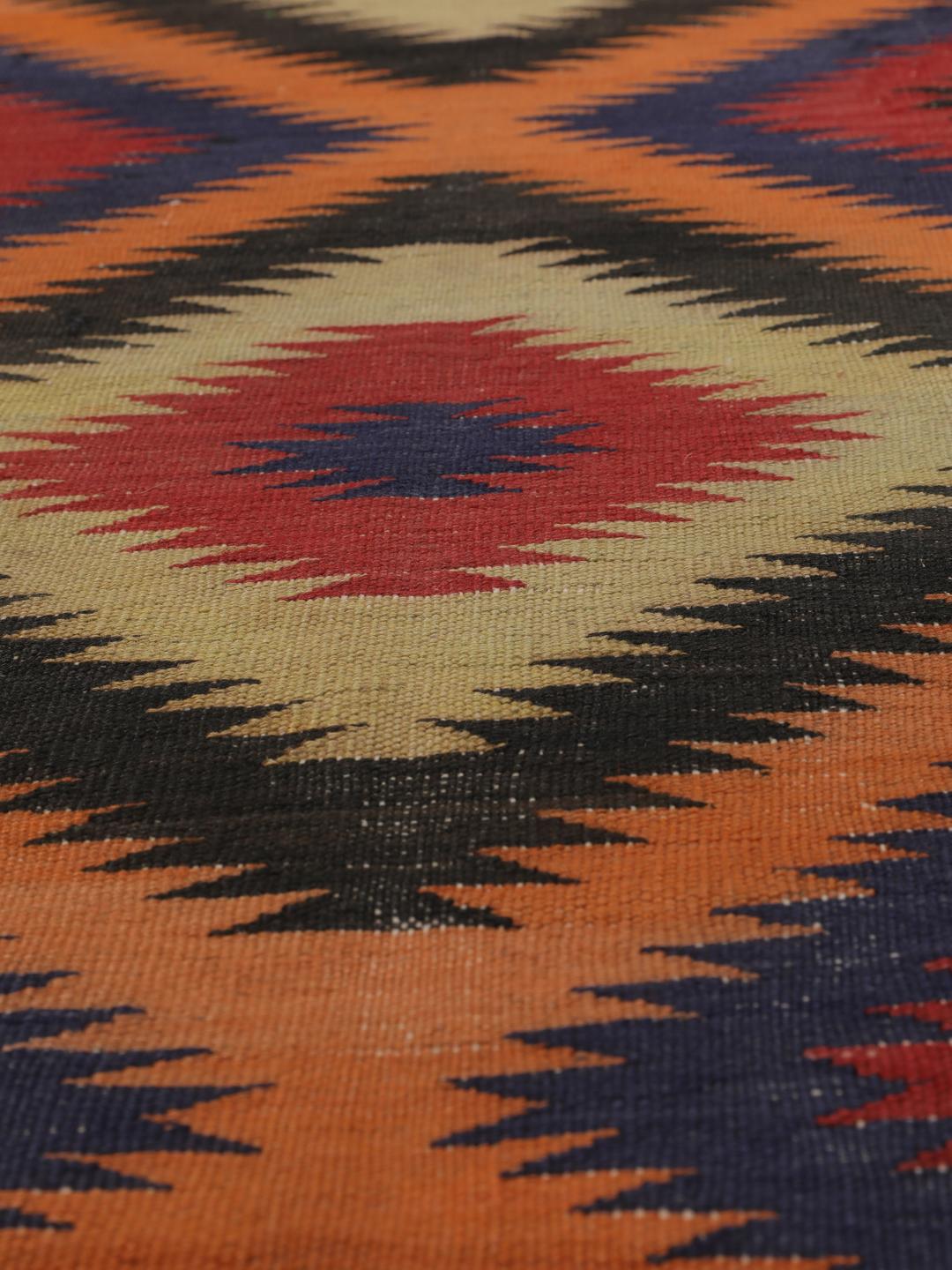
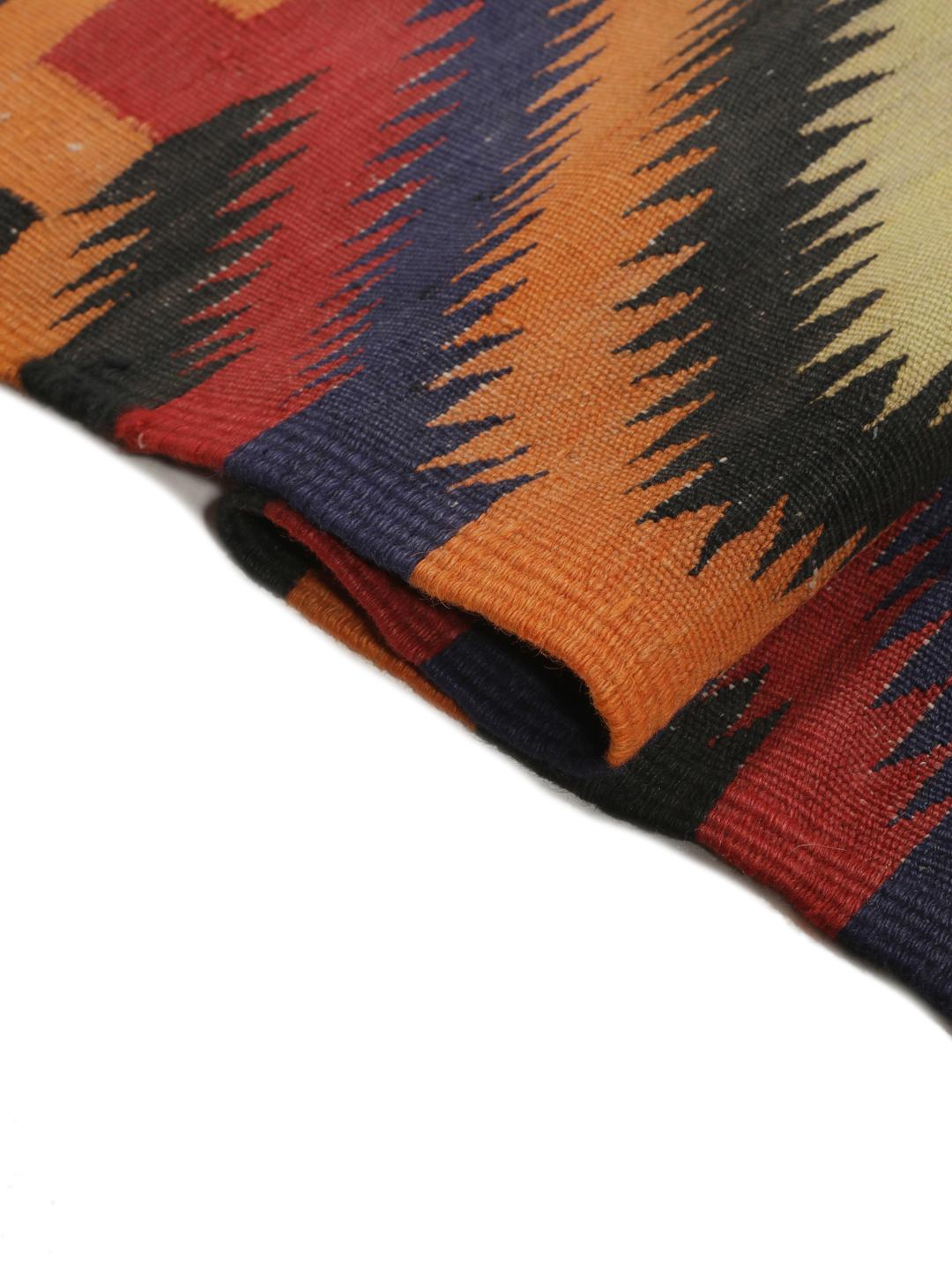
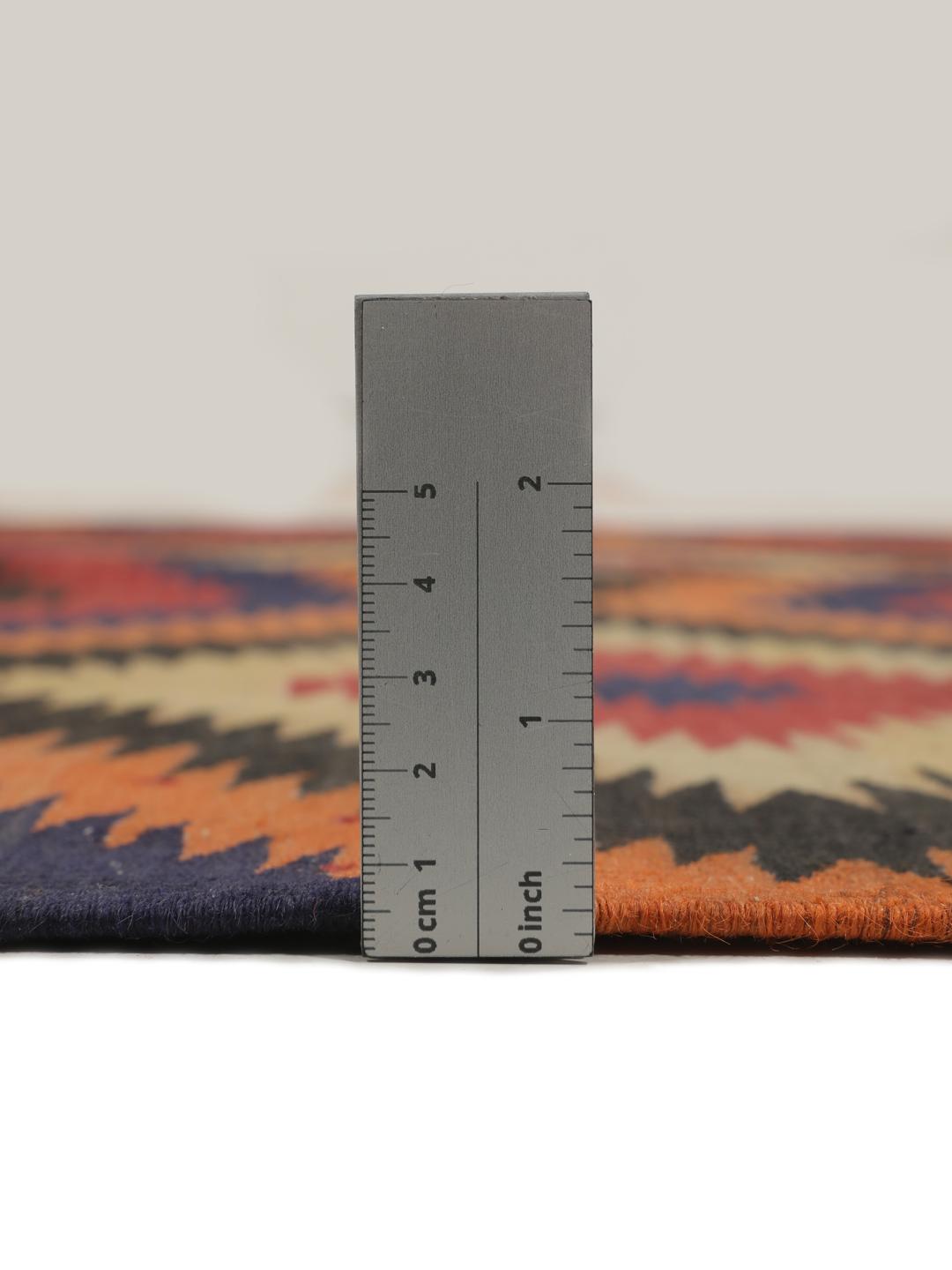
The flat-weave construction is what defines a kelim. By interlacing the warp and weft threads, the weaver creates a smooth surface with no pile. This method allows for the creation of intricate, sharp-edged geometric patterns because the design is built directly into the structure of the rug, rather than being added as a pile layer.
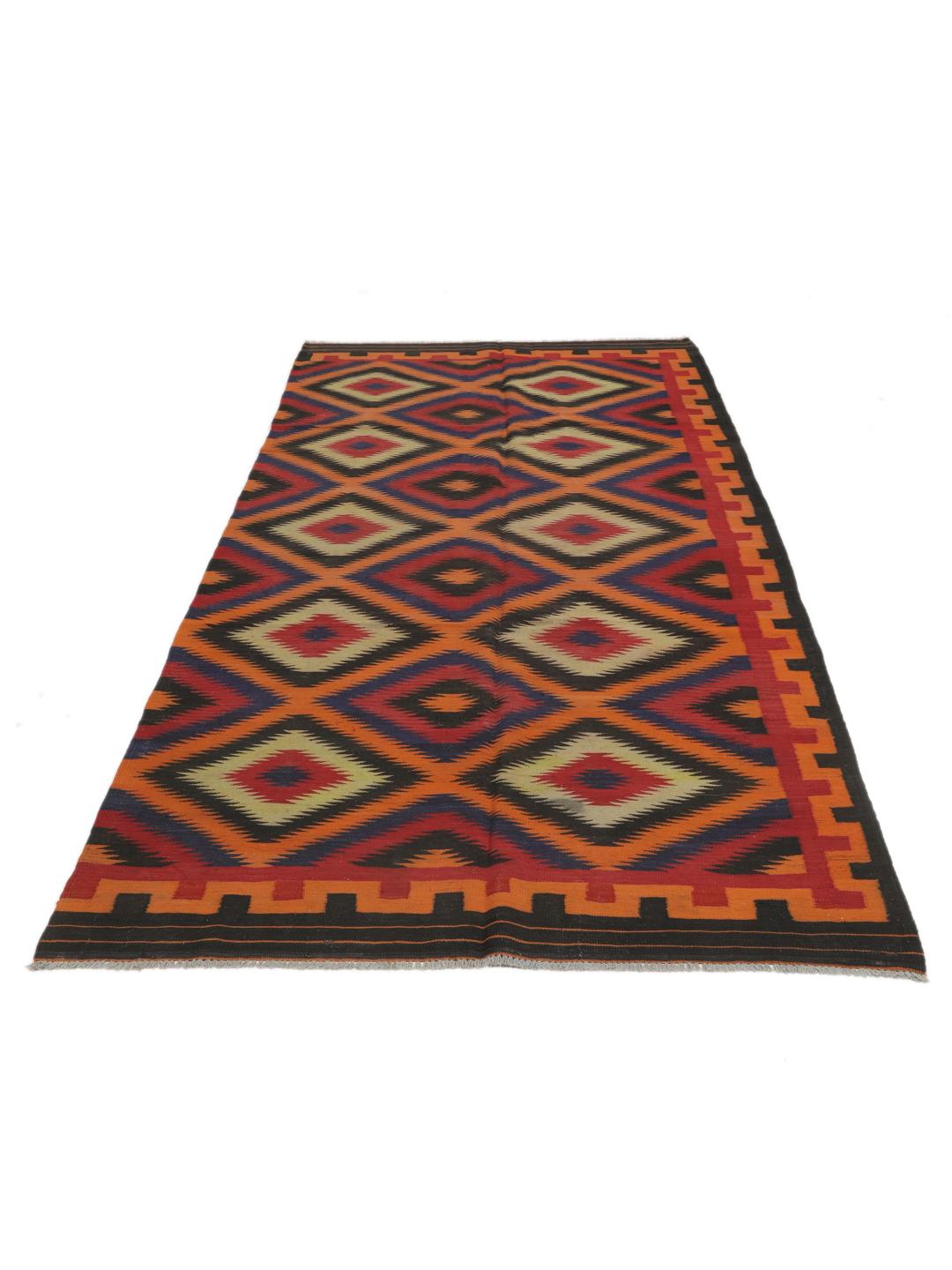
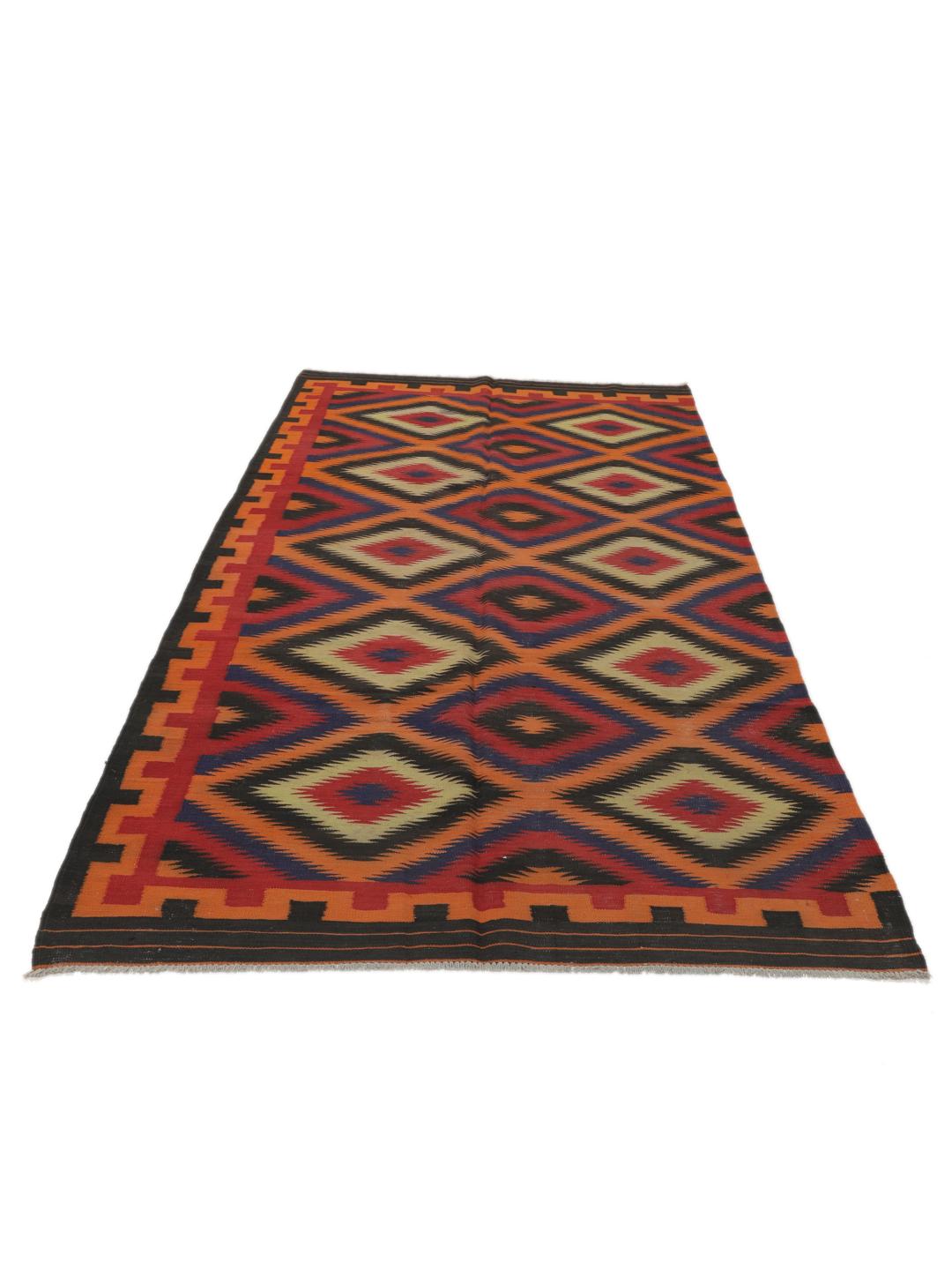
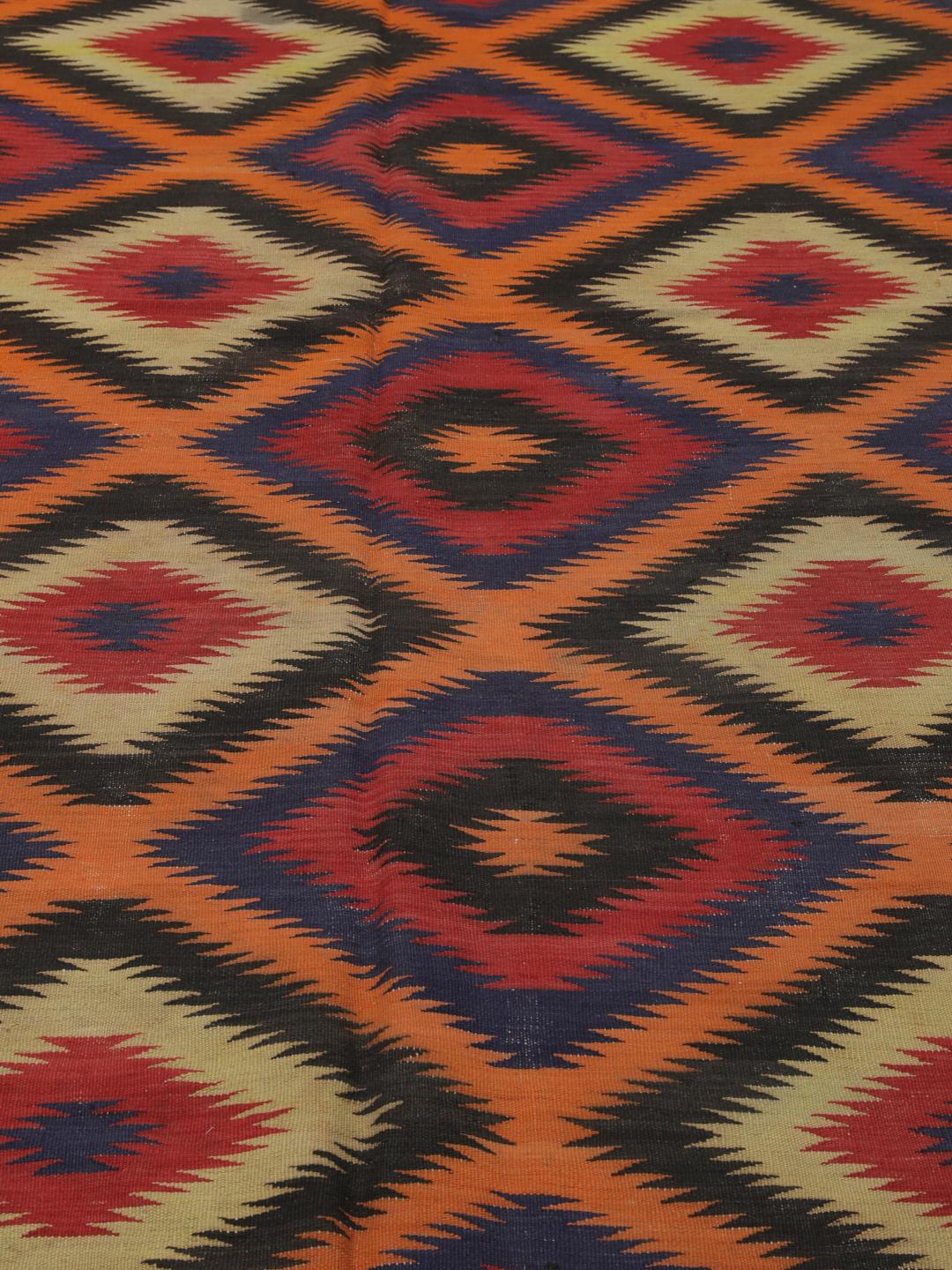
Afghan weaving is renowned for its bold use of colour and geometric symbolism. The diamond motifs and strong, rhythmic borders seen in this piece are classic elements of the region's design language, often representing protection, fertility, or the natural world. These patterns are not merely decorative but are deeply embedded in the cultural identity of the tribes that created them.
Collecting vintage kelims has become a way to preserve a rich, tangible history. As these rugs are hand-woven, each one carries the individual touch and creative decisions of the weaver. Owning a piece like this connects you to a long lineage of craft, offering a sense of authenticity and cultural depth that mass-produced items simply cannot replicate.