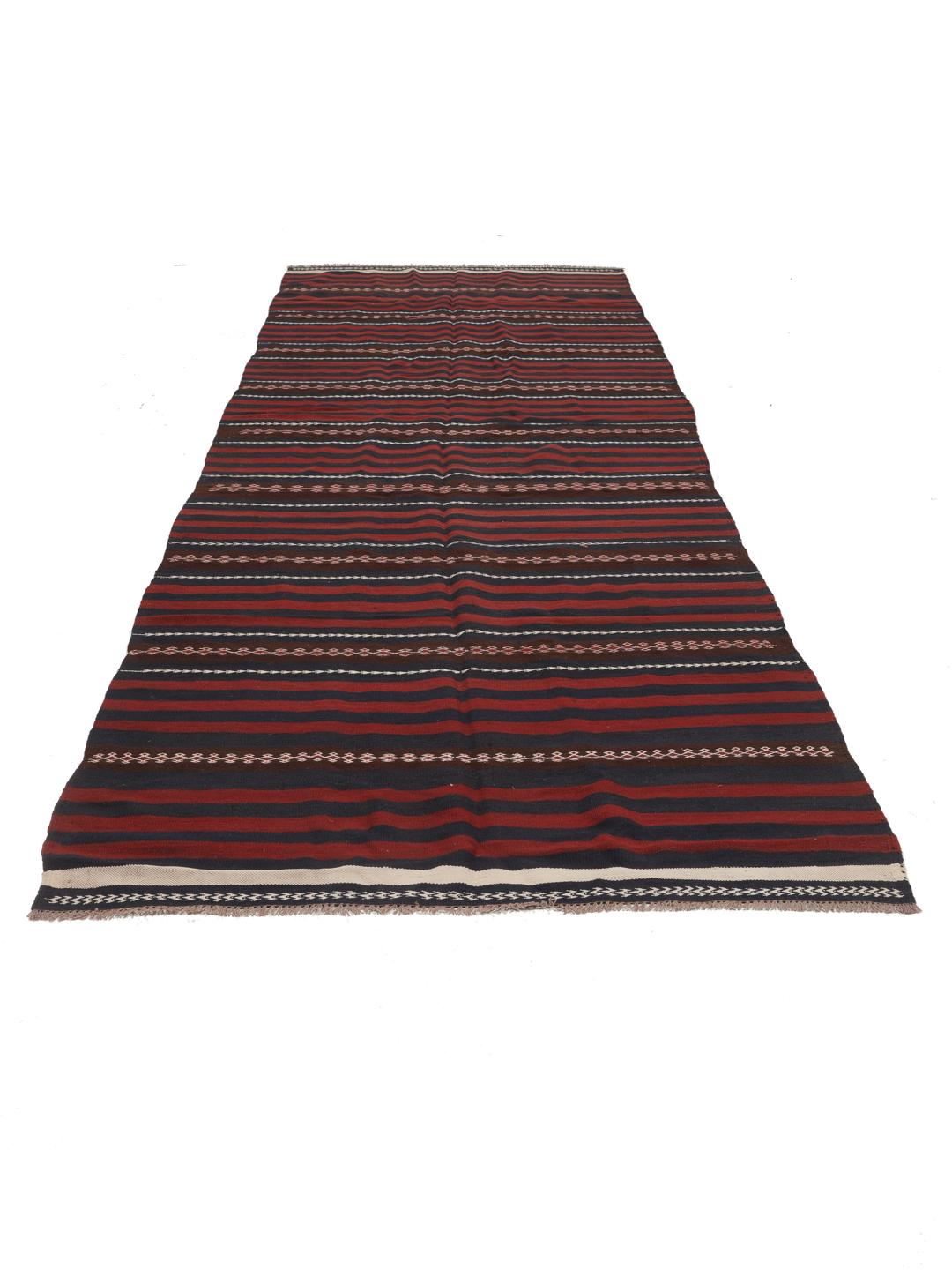
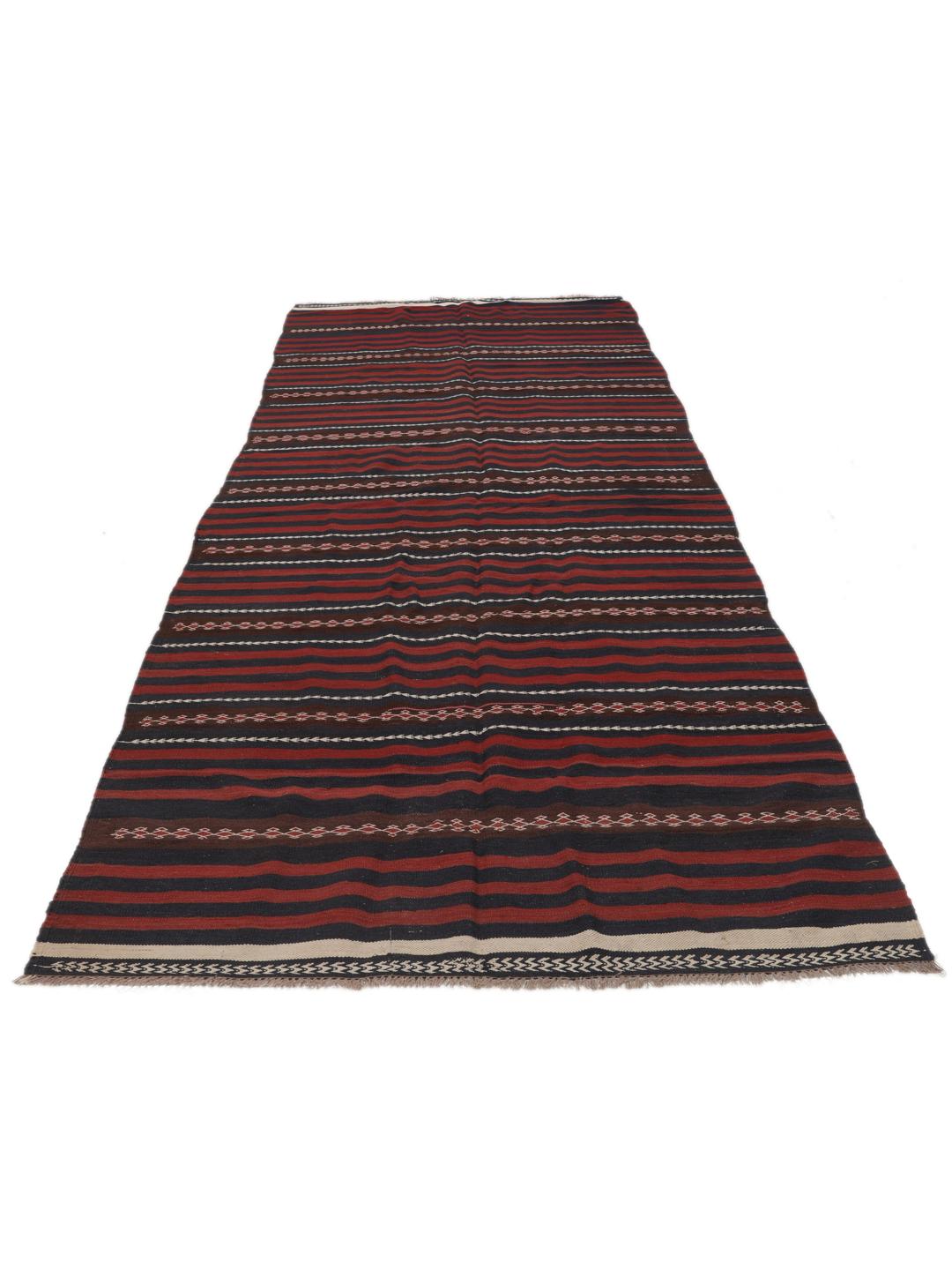
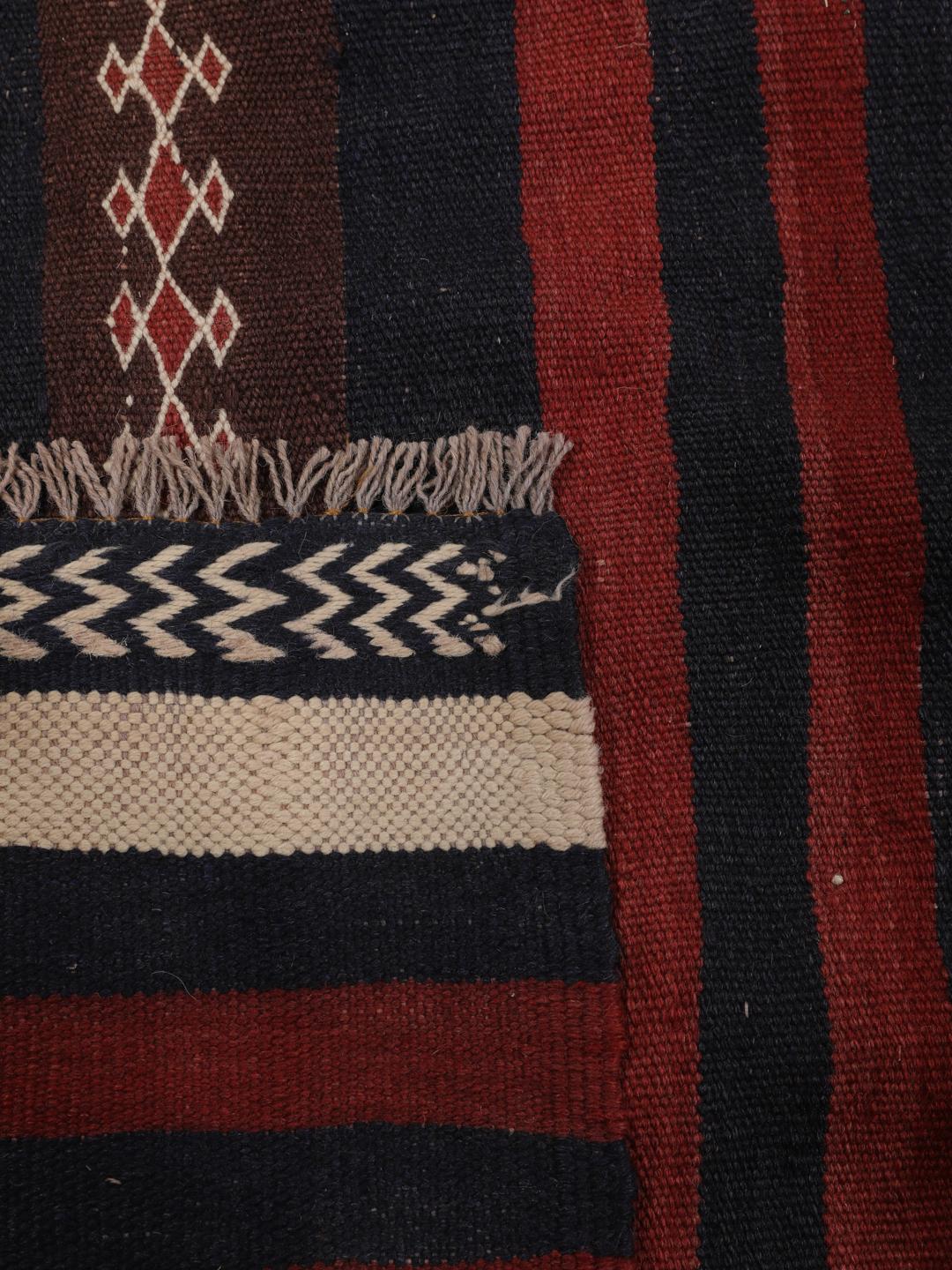
The tradition of weaving in Afghanistan is deeply rooted in the region's cultural history, with skills passed down through generations of nomadic and settled communities. These rugs originate from a landscape where weaving is not merely a task, but a vital part of daily life and cultural expression. The techniques used to create this piece reflect a long-standing heritage, where the geography and the available natural materials dictate the unique character of the textiles produced in this part of the Middle East.
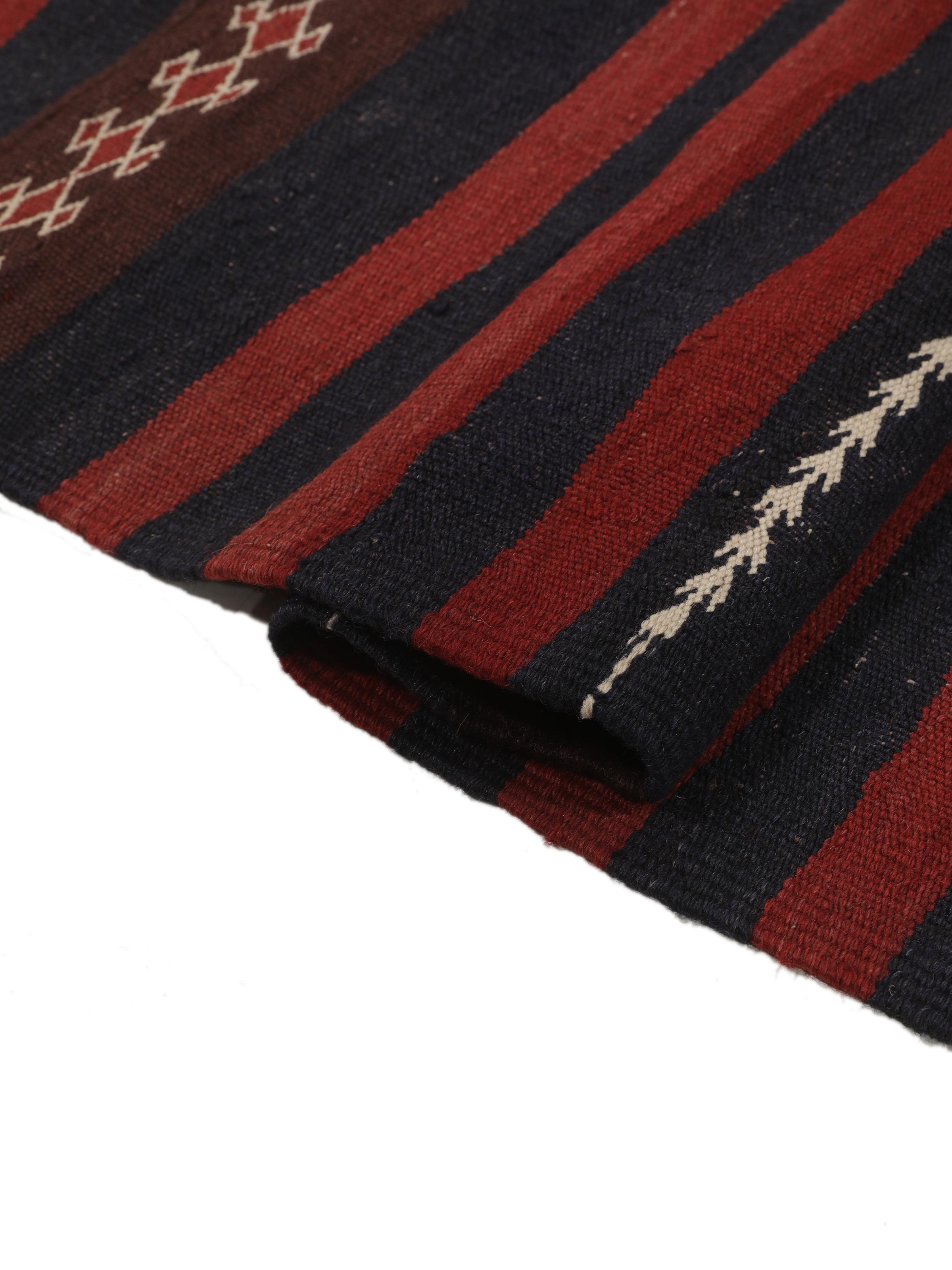
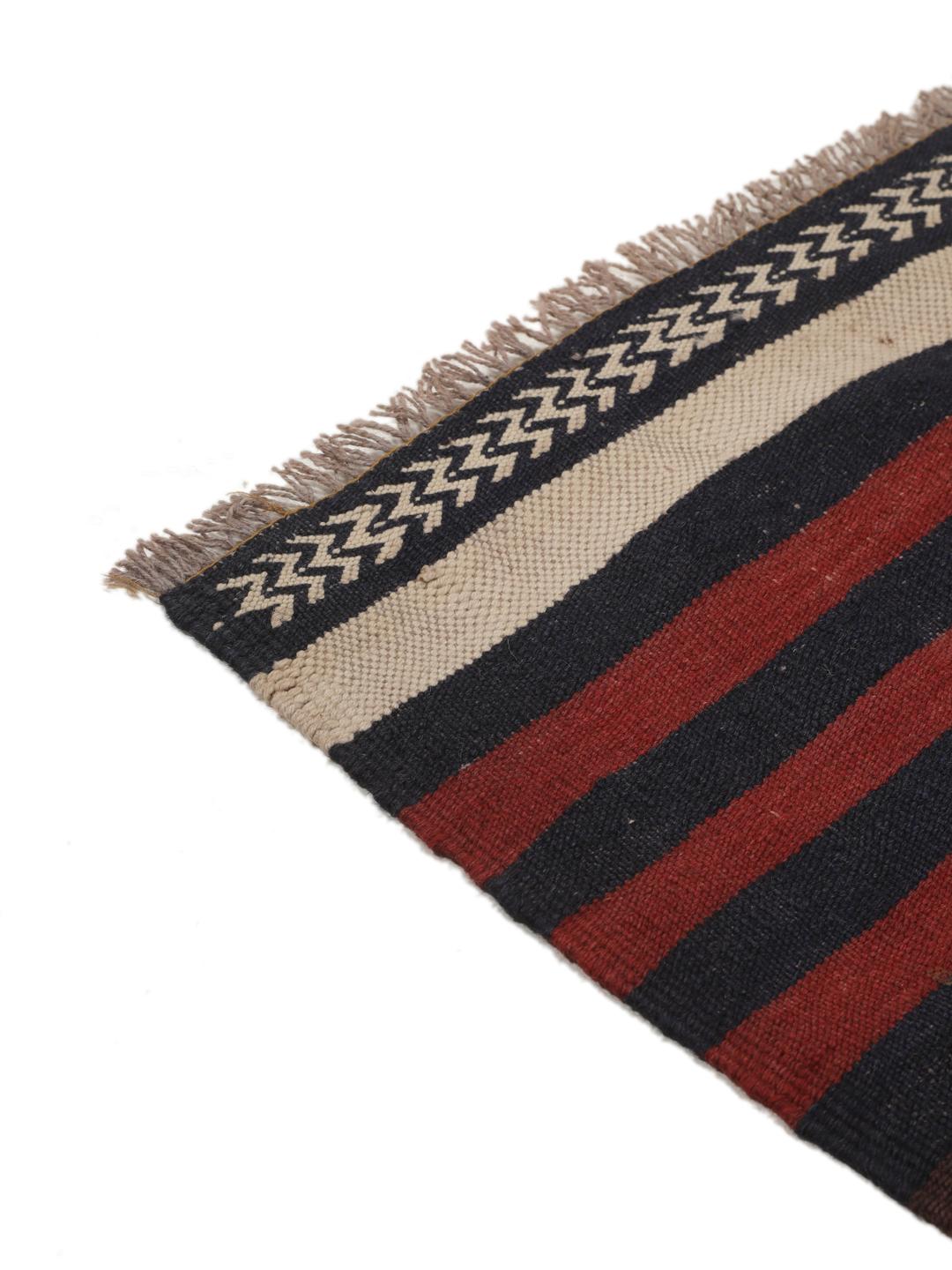
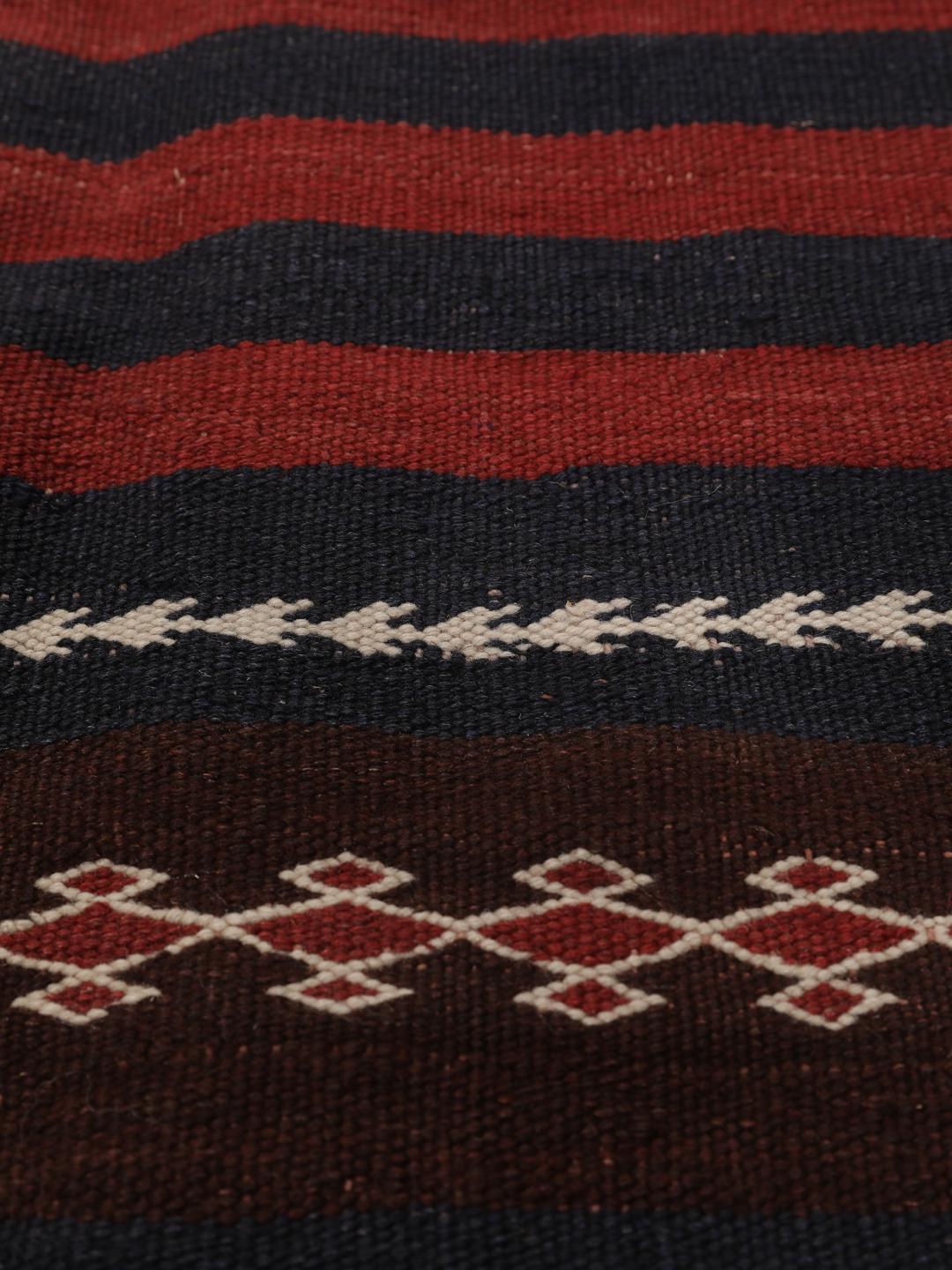
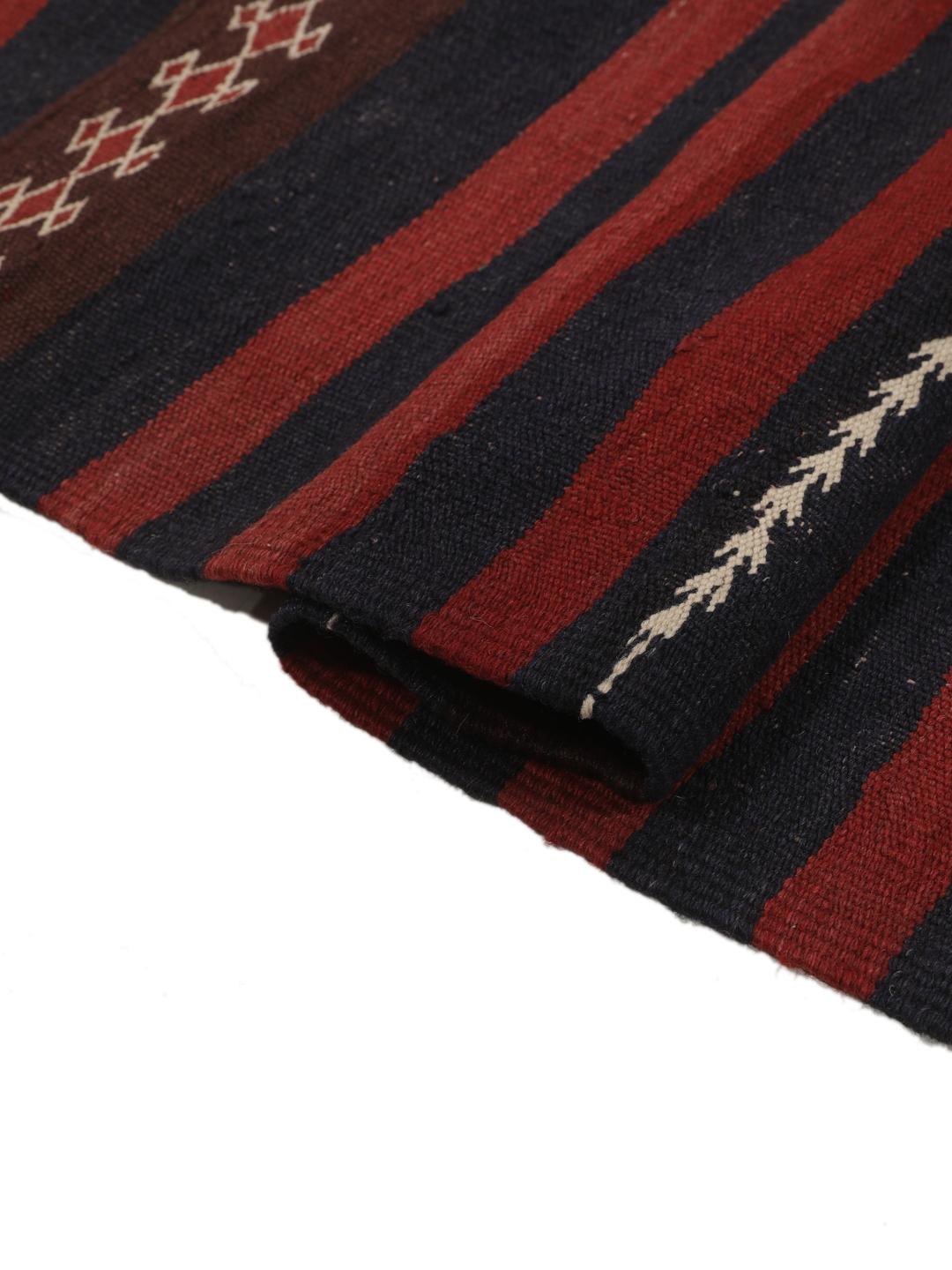
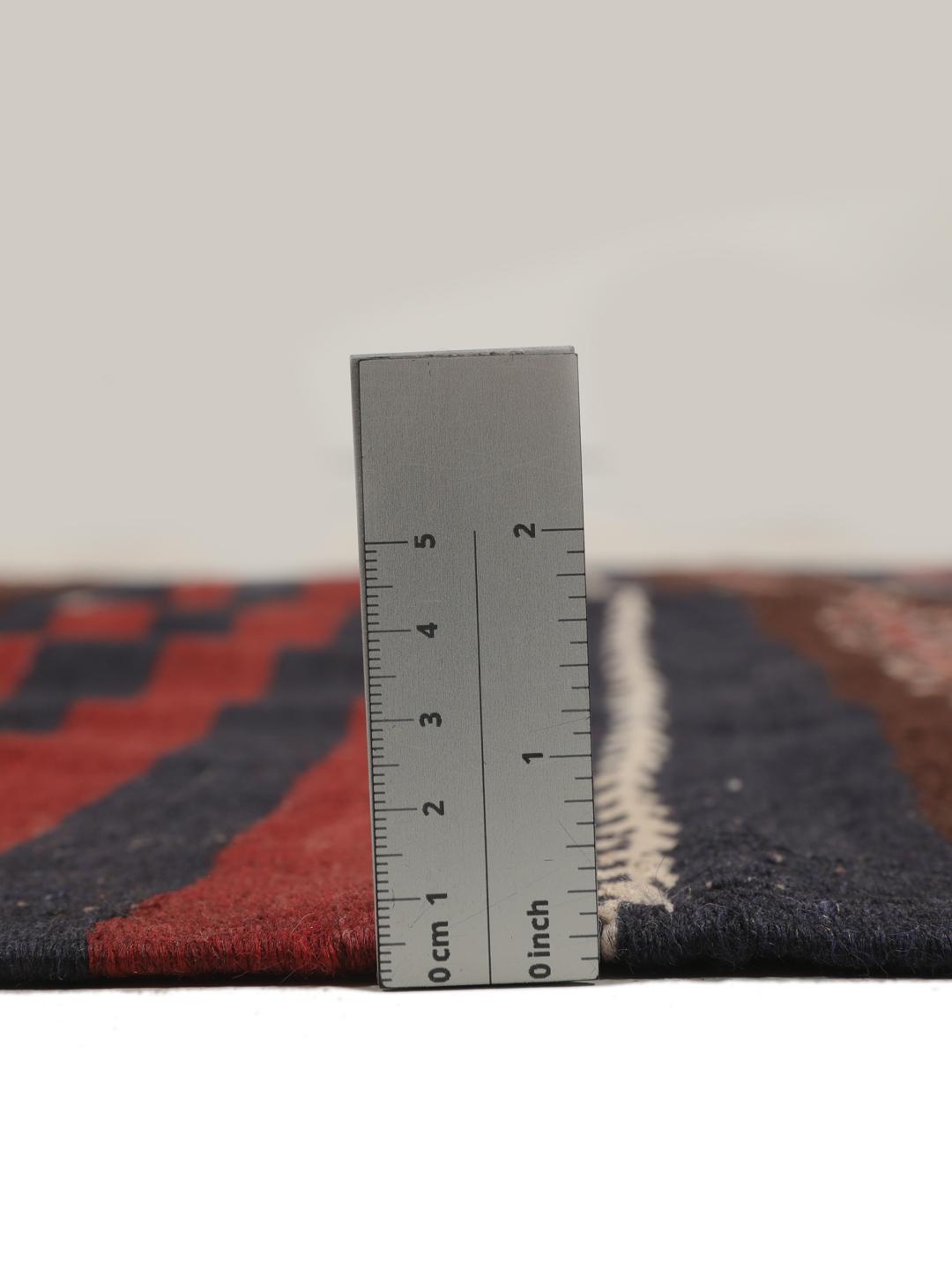
Kelim rugs are defined by their flat-weave construction, which differentiates them from pile rugs by lacking a knotted surface. In this tradition, the weft threads are woven tightly over the warp to create a reversible, durable textile. This process requires great precision, as the weaver must manage the tension of the threads perfectly to ensure the rug remains flat and uniform. This technical approach results in a thinner, lighter, and highly versatile rug that is prized for its strength.
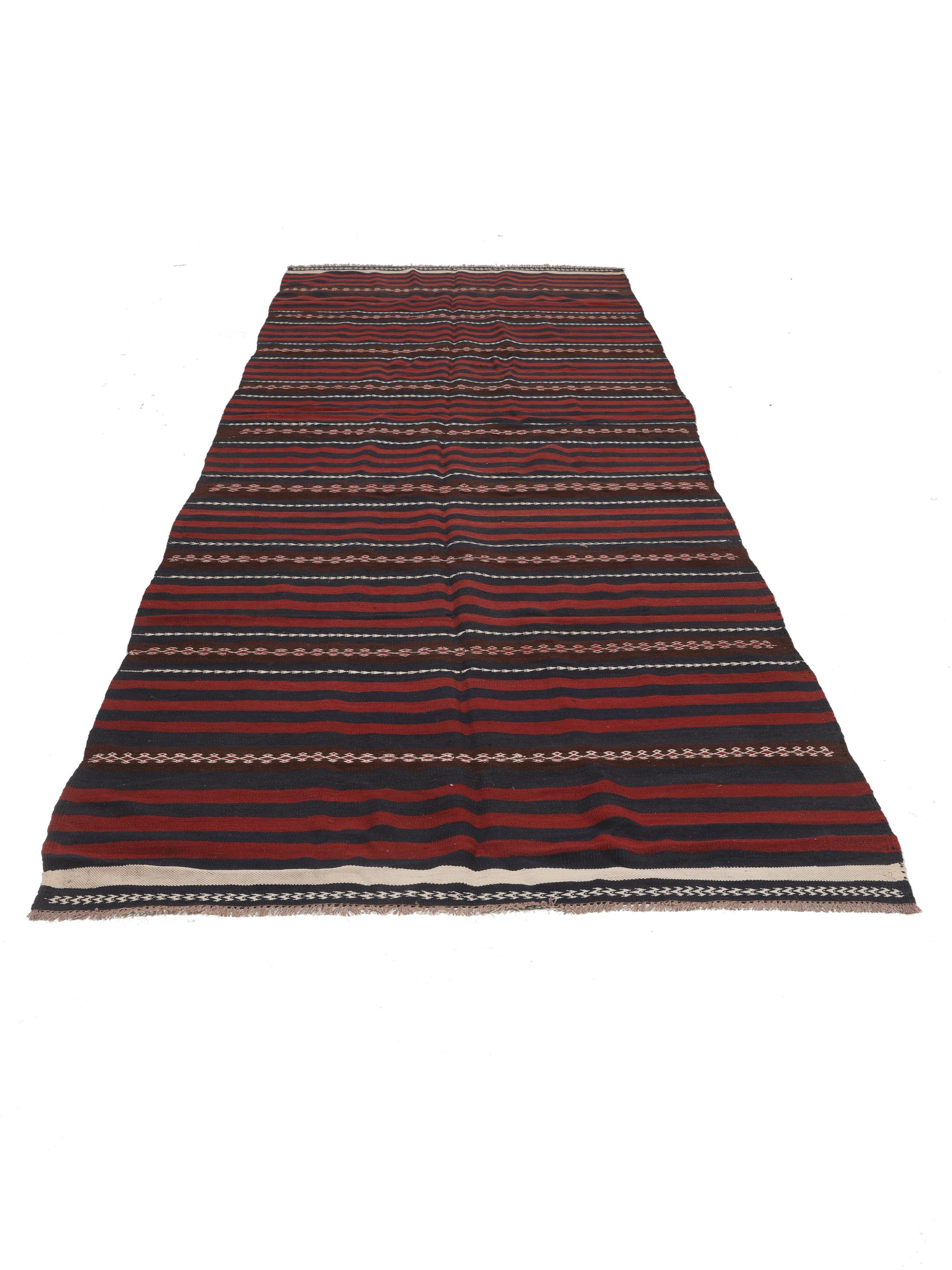
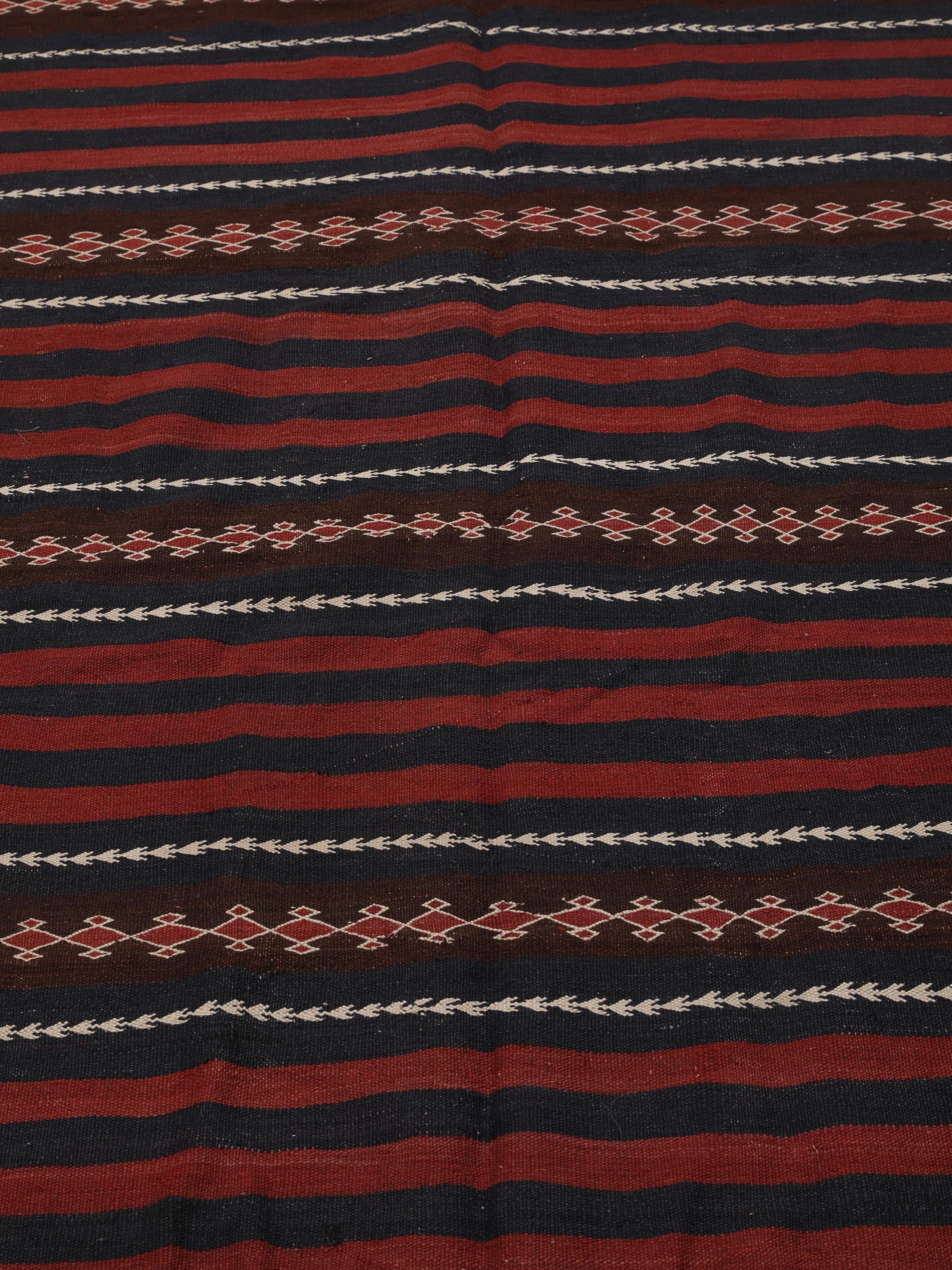
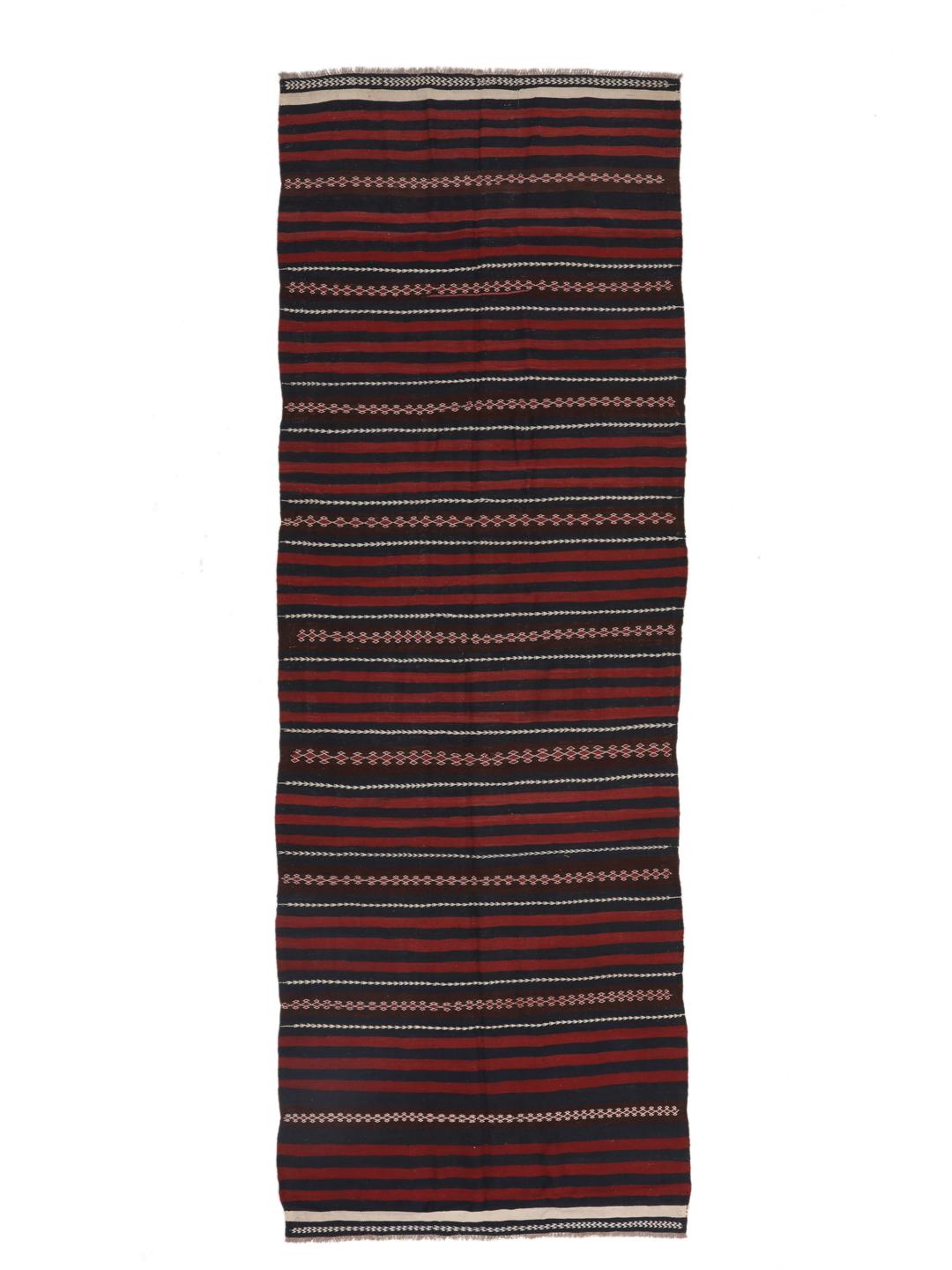
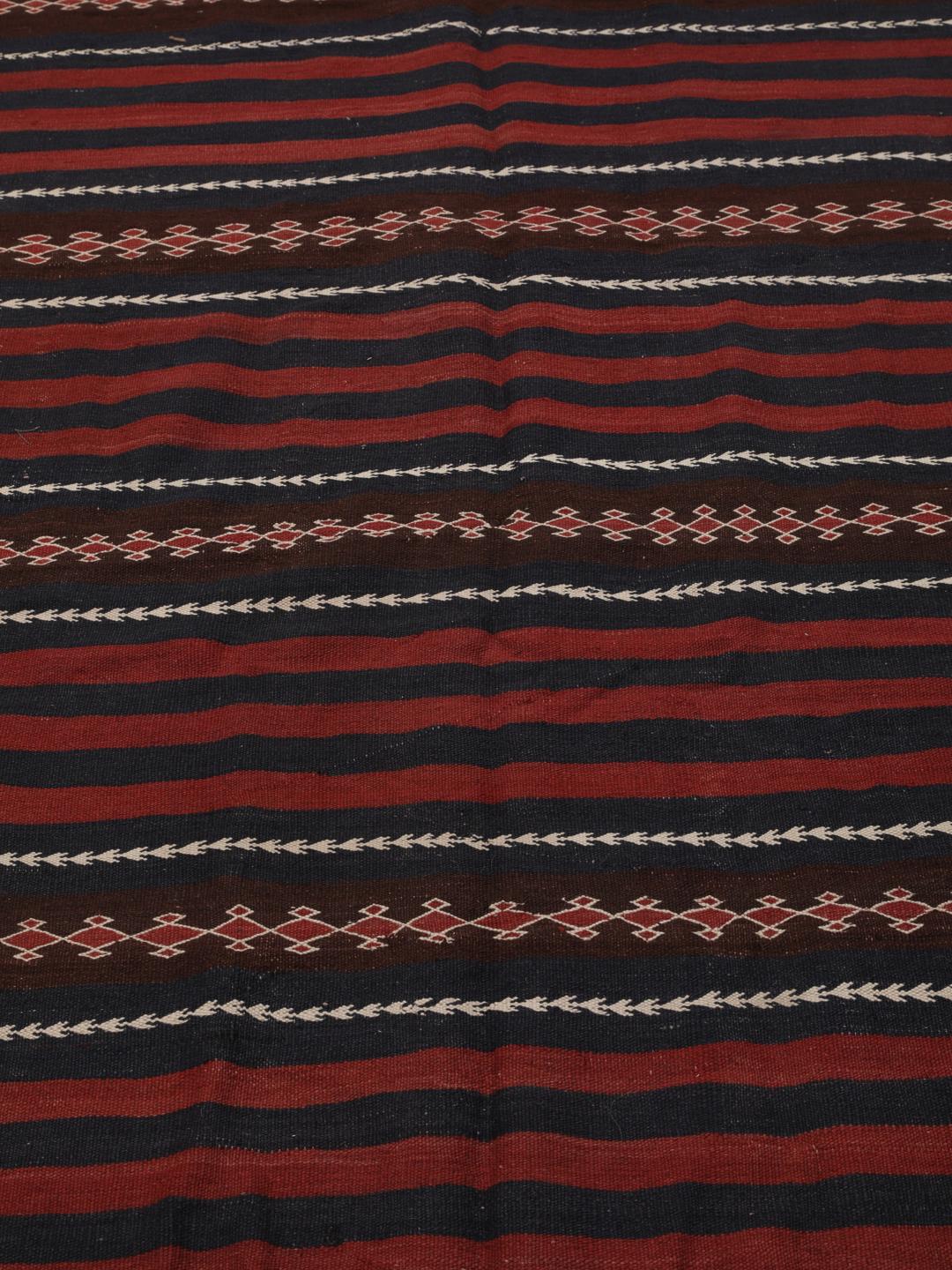
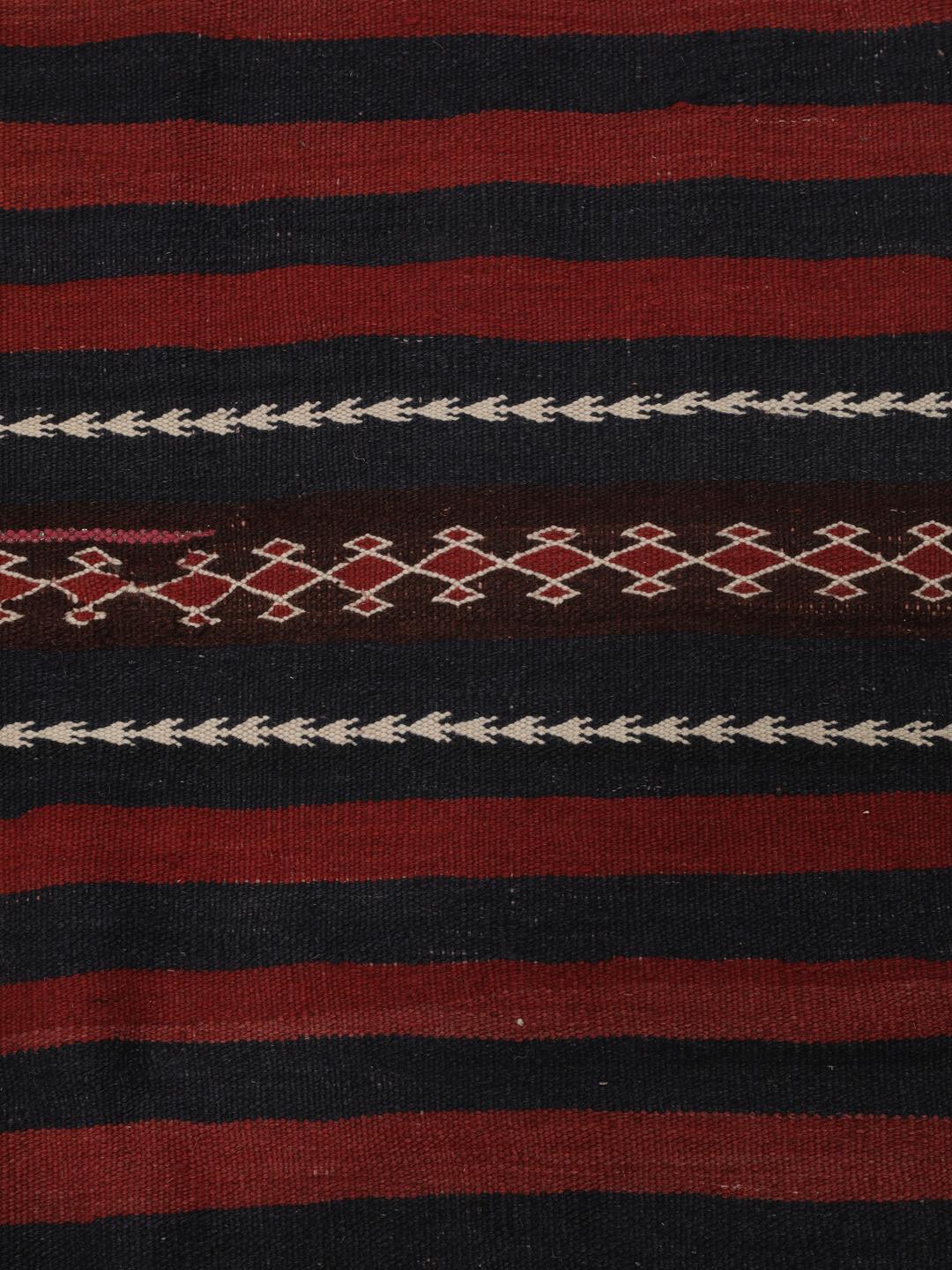
Visually, this runner showcases the classic striped aesthetic common in the region, often punctuated by subtle geometric motifs that represent tribal symbols or local design languages. The use of dark, bold colours is a hallmark of this tradition, reflecting the natural dyes historically available and the aesthetic preferences of the weaving communities. These simple, rhythmic patterns are intended to create a sense of harmony and balance, making the rug a timeless addition to any interior.
Collectors value these pieces for their authenticity and the clear evidence of the artisan's hand. Owning a vintage runner from this tradition means acquiring a piece that carries the weight of history and the unique spirit of its maker. These rugs are not just items of decor but are significant cultural artifacts that connect your home to a wider world of craftsmanship and tradition that has endured for centuries.